What Should DFW Businesses Know Before Their First Office Cabling Installation?

Your Office Network Starts Before Move-In Day
You signed the lease on a new office in Dallas. The paint is drying, the furniture is on order, and move-in is four weeks out. Then someone asks: where do the network cables go?
That question hits harder than most DFW business owners expect. Every workstation, phone, Wi-Fi access point, printer, conference room display, and security camera in your new office needs a cable running back to a central point. If nobody planned for that before the drywall went up, you are already behind.
This guide walks you through everything you need to know before your first office cabling installation, from drop counts and cable types to common mistakes and what to look for in a contractor.
Planning a New Office in Dallas-Fort Worth?
Tell us your project type, building location, and timeline. Cabling In DFW can walk the space and help you plan before the first cable is pulled. Request a cabling quote.
What Is Office Cabling Installation?
Short answer: An office cabling installation is the process of planning, running, terminating, labeling, and testing all the Ethernet, fiber, and low-voltage cables that connect your office equipment to your network.
That includes the cables behind the walls, the wall plates at each desk, the patch panel inside your network closet, and all the connections in between. Think of it as the plumbing for your internet, phones, Wi-Fi, cameras, and anything else that needs a wired connection.
A properly planned office cabling installation covers the physical cable, the pathway it travels through ceilings, walls, and conduit, the termination points like jacks, patch panels, and racks, labeling, and post-installation testing with a Fluke or equivalent tester.
If any part of that chain is skipped or done poorly, you end up with dead drops, slow connections, and a data closet that nobody can troubleshoot.
Why First-Time Office Cabling Planning Matters for DFW Businesses
Here is the problem we see at least once a month: a business moves into a new office, the IT team plugs everything in, and half the drops do not work. The Wi-Fi coverage has dead zones because nobody ran cables to the access point locations. The conference room has one Ethernet jack when it needs four. The network closet is a pile of unlabeled cables and a switch sitting on a folding table.
Fixing cabling after the office is furnished costs two to three times more than doing it during the build-out. Ceilings are harder to access once lights and HVAC are installed. Walls are sealed. Furniture blocks pathways. And the business is already open, so work has to happen after hours.
We have seen DFW businesses lose a full week of productivity because the cabling was treated as an afterthought. The cost of getting it right the first time is almost always less than the cost of fixing it later.
What Systems Need Cabling in a Modern Office?
If you are planning your first office cabling installation in Dallas-Fort Worth, start by listing every system that needs a wired connection. Most business owners undercount. Here is what a typical DFW office needs:
Workstations and Desk Areas
Every desk that will have a computer needs at least one Ethernet drop. Many offices run two per desk: one for the computer and one for a VoIP phone. If your team uses docking stations, you may want a third for a dedicated connection. Count every seat, including shared desks and hot-desking stations.
Wi-Fi Access Points
Wireless does not mean no wires. Every Wi-Fi access point needs a cable run back to the network closet. In a typical DFW office, you need one access point for roughly every 1,500 to 2,500 square feet, depending on wall materials and layout. Open floor plans need fewer. Offices with lots of drywall and glass partitions need more.
VoIP Phones and Conference Rooms
VoIP phones run on Ethernet. If you are using a cloud-based phone system like RingCentral, 8×8, or Teams calling, every phone handset needs its own cable drop. Conference rooms are especially demanding. A single conference room might need drops for a speakerphone, a display, a video conferencing bar, and a backup wired connection for a laptop.
Printers, Copiers, and Shared Devices
Networked printers and copiers work better on a wired connection. Wireless printing in a commercial environment causes headaches. Run at least one drop to each printer location and any shared device areas.
Security Cameras and Access Control
IP security cameras need Ethernet cables, usually Cat6 with Power over Ethernet so the camera gets data and power from the same cable. Access control panels for doors and badge readers are also low-voltage systems that need cabling planned during the build-out.
If your DFW office space requires cameras for the lobby, back door, parking lot view, or server room, those cable runs need to be planned before the ceiling tiles go back in.
Network Closets, Racks, and Patch Panels
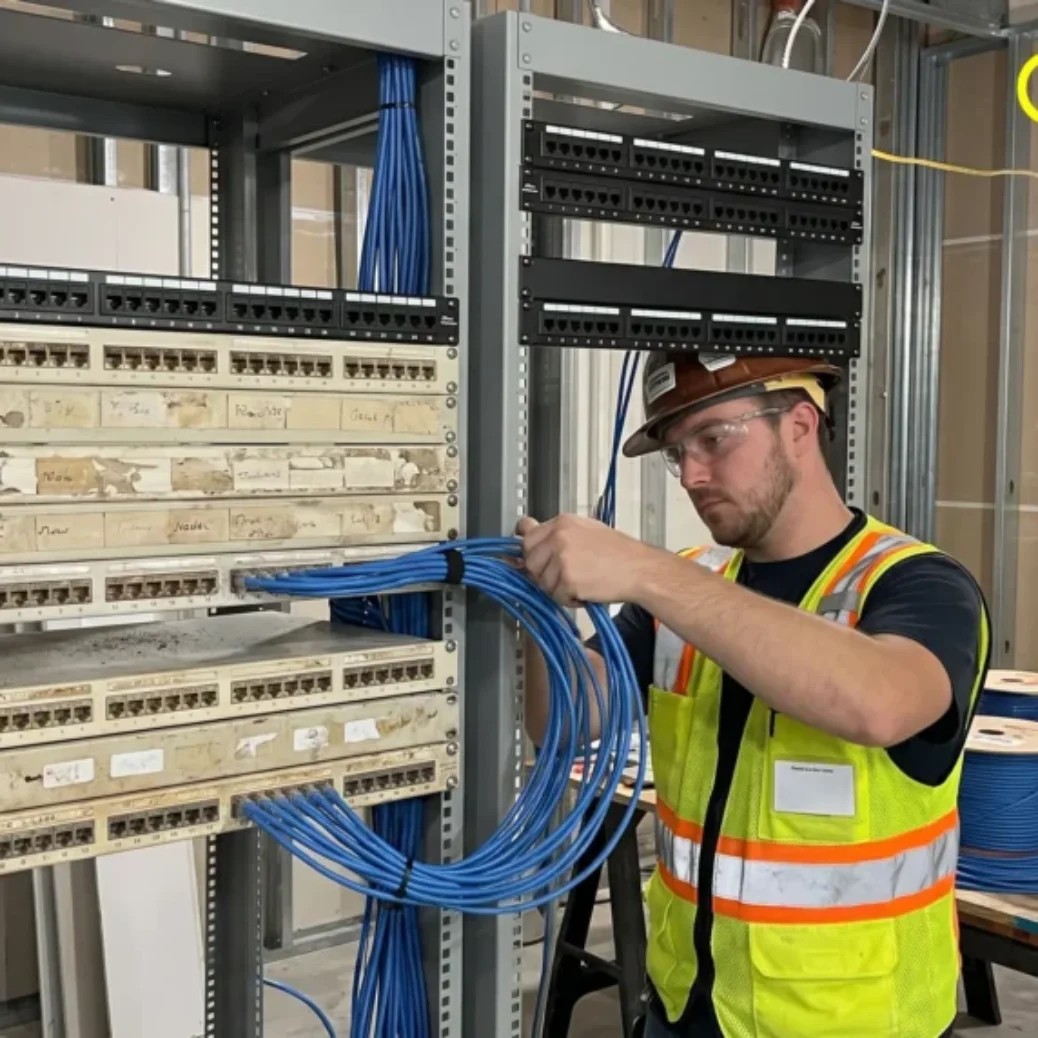
All of those cables terminate somewhere. Your network closet, sometimes called the MDF or IDF, is where the patch panel, switches, firewall, and UPS live. The closet needs proper ventilation, a rack or wall-mount bracket, and enough space to work. We have walked into DFW offices where the “network closet” was a literal coat closet with cables draped over hangers. Do not be that office.
Not Sure How Many Cable Drops Your Office Needs?
Cabling In DFW can walk the space, review your floor plan, and help you build a practical cabling plan before installation starts. Contact us for a free site walkthrough.
Signs Your Office Cabling Plan Needs More Attention
If any of these sound familiar, your plan probably needs another pass before you hire a contractor:
- You do not have a floor plan showing where every desk, phone, printer, camera, and access point will go
- Your drop count is based on guessing rather than counting actual devices and seats
- Nobody has checked whether the ceiling is accessible for pulling cable
- The network closet location has not been decided yet
- You have not thought about where Wi-Fi access points need to be mounted
- There is no plan for labeling cables or documenting the installation
- You are assuming the existing cabling in a previously occupied suite will work for your layout
Key Questions to Answer Before Installation Starts
Before you bring in a network cabling contractor, get clear answers to these questions. They will save you time, money, and headaches down the road.
- How many employees will sit in this office? Count current headcount plus expected hires over the next two to three years.
- What is the floor plan? Every cabling proposal starts with a layout. If you do not have one, get one from your landlord or architect.
- Is the ceiling accessible? Drop ceilings are easy to cable. Exposed concrete, sealed drywall, and hard-lid ceilings add cost and complexity.
- What cable type do you need? Cat6 covers most office needs. Cat6A is better for 10 Gigabit and Wi-Fi 6/6E access points. Fiber may be needed for backbone runs or multi-floor buildings.
- Where will the network closet go? It should be centrally located, ventilated, and lockable.
- Does the landlord have cabling rules? Some DFW commercial leases require specific contractors, fire-rated cable (plenum), or ceiling restoration after cable pulls.
- What is the timeline? Office cabling installation should start before furniture arrives, ideally during the build-out or renovation phase.
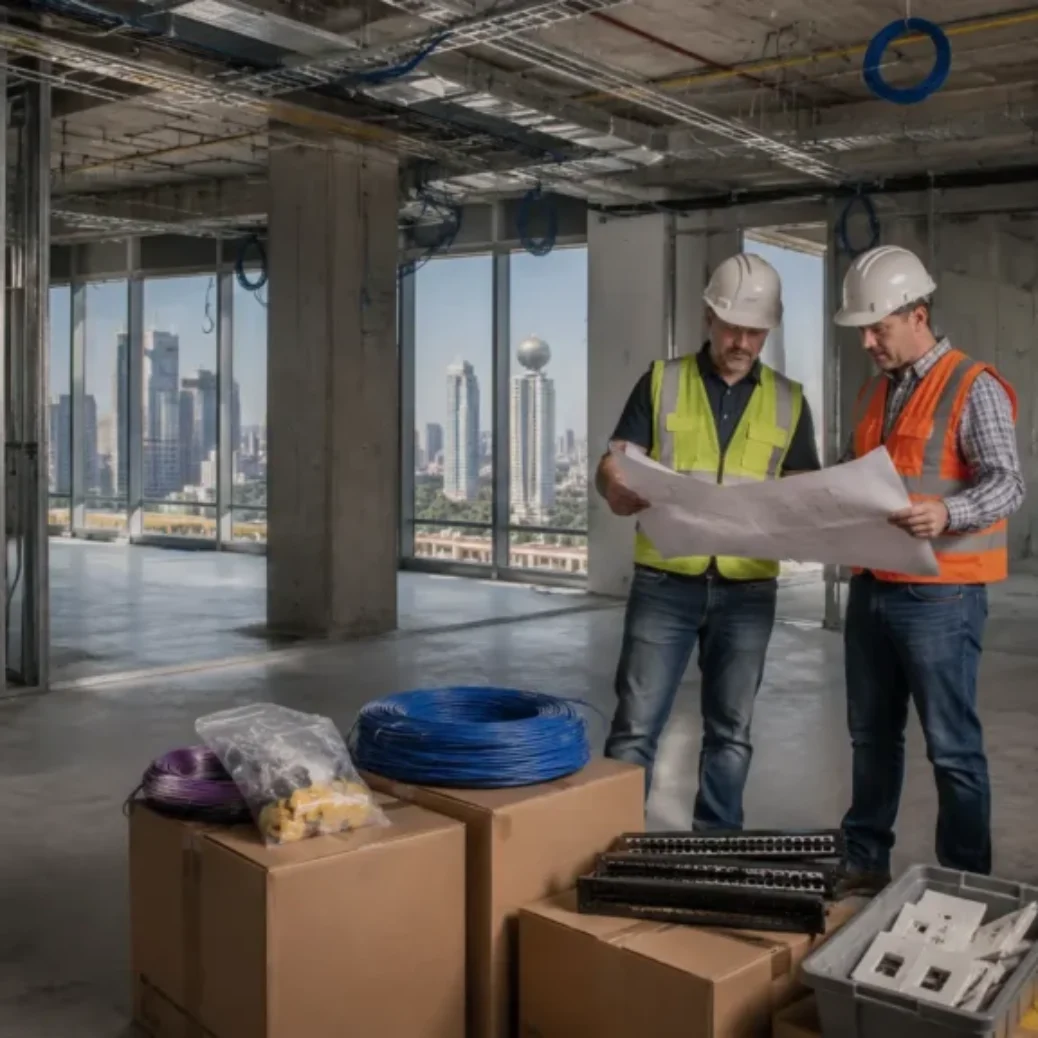
If you are working with a general contractor on a new build-out, loop in your cabling company early. We coordinate with GCs across Dallas-Fort Worth regularly, and the earlier cabling is part of the construction schedule, the smoother the project goes.
How Many Cable Drops Does Your Office Need?
A cable drop is a single cable run from the network closet to a wall plate or device location. Here is a rough formula we use during site walkthroughs in DFW:
- 2 drops per desk (computer + phone)
- 1 drop per Wi-Fi access point
- 2 to 4 drops per conference room
- 1 drop per printer or copier
- 1 drop per security camera
- 1 drop per access control panel
- Spare drops for growth (usually 15 to 25 percent above current count)
A 20-person Dallas office with one conference room, two printers, four Wi-Fi access points, and two cameras would need roughly 55 to 65 drops. That is more than most people expect.
Our cabling calculator can help you estimate your drop count before requesting a quote.
Cat6, Cat6A, Copper, and Fiber: What Should a First Office Use?
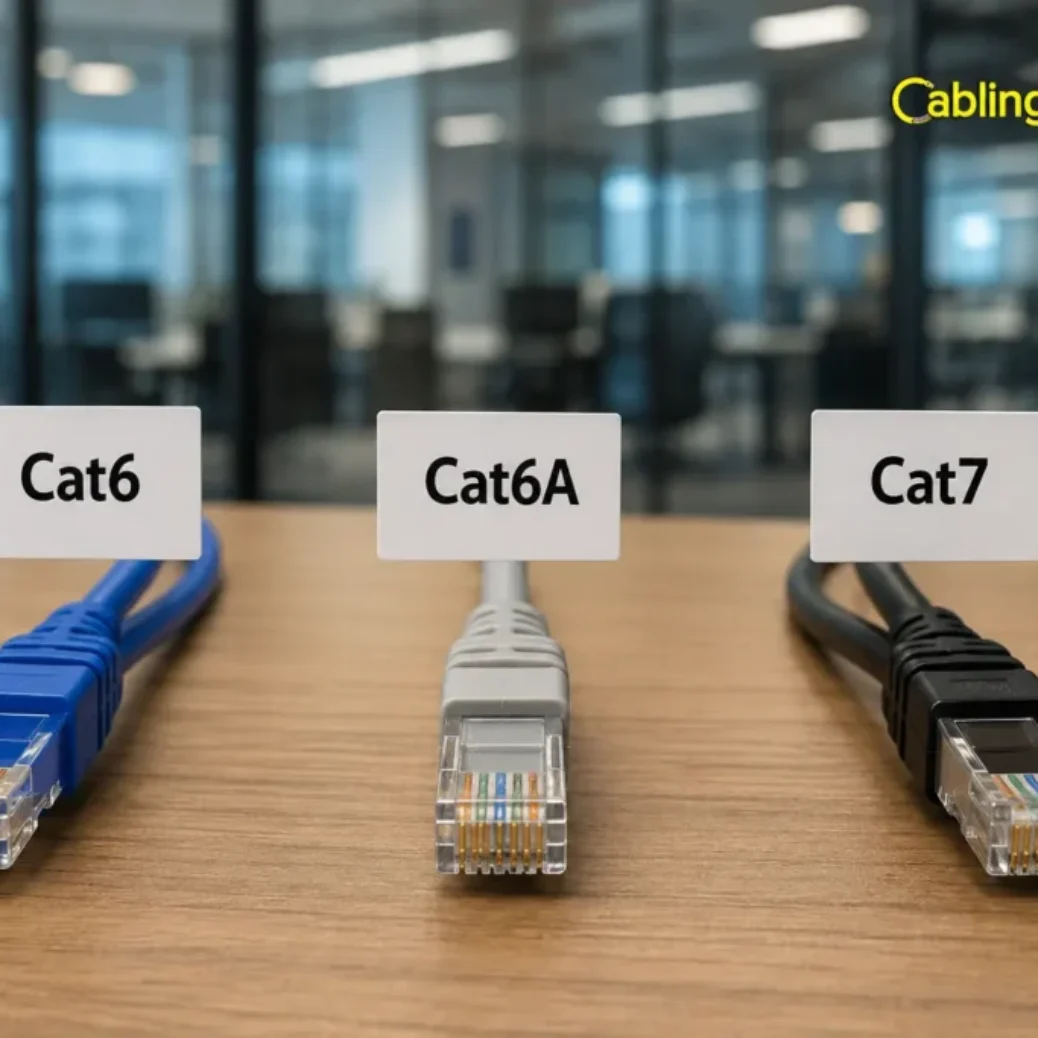
Most first-time office cabling installations in DFW use Cat6 or Cat6A copper cable. Fiber is used for backbone runs, server rooms, and multi-floor buildings. Here is how they compare. If you want a deeper breakdown, our guide on Cat6 vs Cat6A vs Cat7 for DFW offices goes into more detail.
|
Cabling Type |
Best For |
Limitations |
Common Office Use |
|
Cat6 |
Standard office desks, phones, printers. Supports 1 Gbps up to 100m. |
Limited to 10 Gbps only at shorter distances (55m). Not ideal for Wi-Fi 6E APs. |
Small offices, budget-conscious first installs |
|
Cat6A |
10 Gbps at full 100m distance. Better shielding. Supports PoE+ and Wi-Fi 6/6E APs. |
Thicker cable, slightly higher material cost. Harder bends in tight spaces. |
Growing offices, medical clinics, AV-heavy conference rooms |
|
Single-Mode Fiber |
Long distances, backbone between floors/buildings. Extremely high bandwidth. |
Higher install cost. Requires specialized termination equipment. |
Multi-floor DFW offices, MDF-to-IDF runs, data centers |
|
Multimode Fiber |
Short-distance high-speed runs inside buildings. Cheaper transceivers than single-mode. |
Limited distance (up to ~550m for 10G). Not for long outdoor runs. |
Server room connections, switch-to-switch links within the same floor |
For most first-time DFW office installations, Cat6A is the best long-term investment. The material cost difference between Cat6 and Cat6A is small compared to the labor. And labor is the expensive part.
Common First Office Cabling Mistakes to Avoid
We have fixed enough bad first installations across Dallas-Fort Worth to write a book about it. Here are the ones that come up the most:
- Not running enough drops. The number one mistake. Businesses count desks but forget phones, cameras, access points, printers, and conference room gear. Then they pay double to add drops later.
- Forgetting Wi-Fi access points. Your Wi-Fi is only as good as the cable feeding the access point. No cable, no coverage.
- Using the cheapest cable they can find. Bargain cable fails testing, breaks at termination, and causes intermittent network problems that are hard to diagnose. Cheap cabling costs more later.
- Skipping cable labeling. Unlabeled cables mean your IT person or next contractor has to trace every run manually. We label both ends of every cable: patch panel side and wall plate side.
- No patch panel organization. Cables punched down in random order make adds, moves, and changes a nightmare. A clean patch panel saves hours over the life of the office.
- Ignoring future growth. If you plan to hire five more people in two years, run those drops now while the ceiling is open. The cable is cheap. The labor to come back later is not.
- Waiting until move-in week. Cabling should be one of the first trades in the build-out, not the last. We have done emergency installs during a move-in weekend, and nobody enjoys that experience.
- Hiring a contractor without commercial cabling experience. Residential electricians and handymen are not cabling contractors. Commercial office cabling installation requires Fluke-tested runs, proper termination, organized patch panels, and documentation.
What a Professional Office Cabling Installation Process Looks Like
Here is what the process looks like from start to finish when you work with a commercial cabling team in Dallas-Fort Worth:
- Site walkthrough. We walk the space with you, check ceiling access, identify cable pathways, and note any obstacles.
- Floor plan review. We mark every drop location on the floor plan: desks, APs, cameras, conference rooms, printers, and network closet.
- Drop count and cable type recommendation. Based on your current needs and growth plans, we finalize the drop count and recommend Cat6, Cat6A, or fiber where needed.
- You get a written proposal with scope, materials, timeline, and pricing. No surprises.
- We coordinate with your GC, landlord, or property manager to schedule the install during the right phase of the build-out.
- Cable pulling and termination. Our team runs the cable, terminates at both ends (wall plates and patch panel), and organizes everything in the rack.
- Every cable is labeled at both ends. Every port on the patch panel is labeled to match the corresponding wall plate.
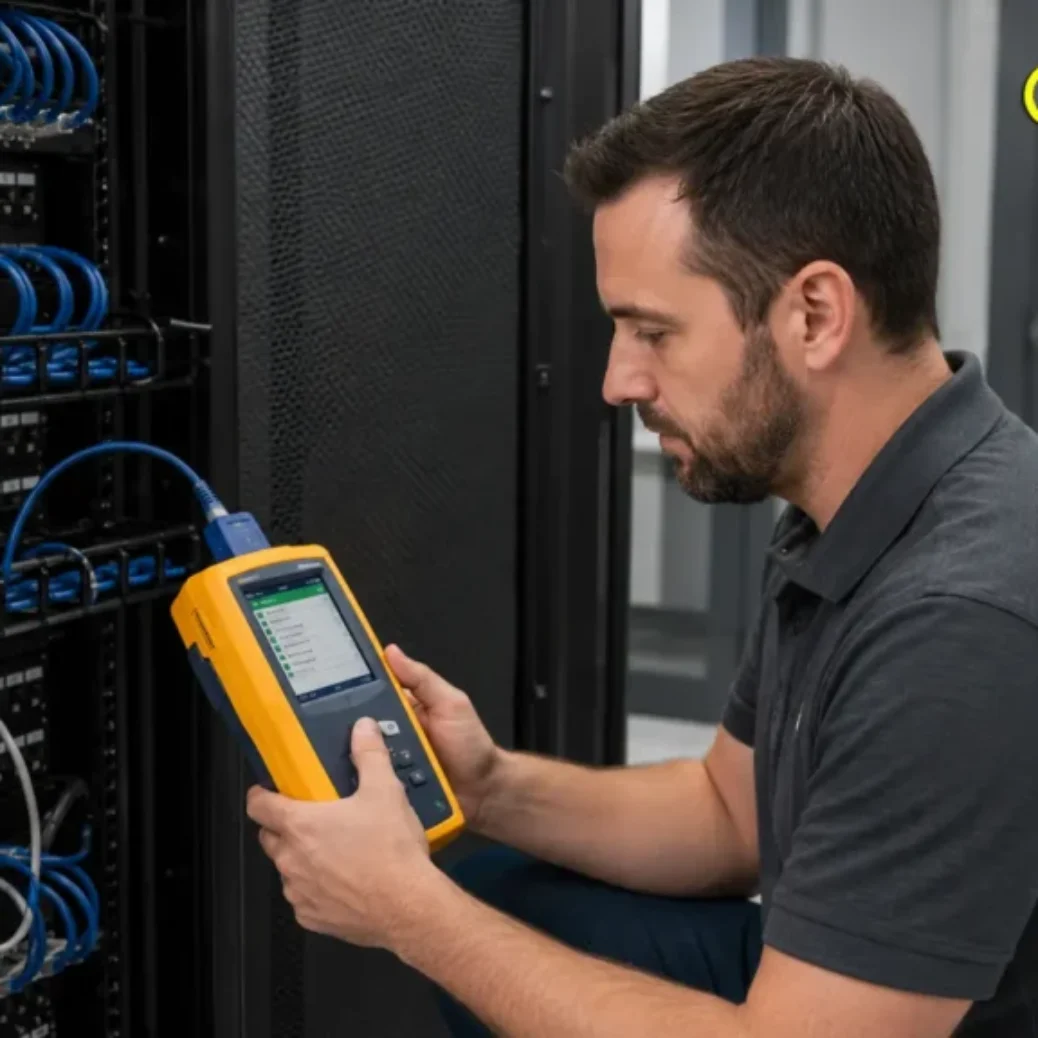
- Every single cable run is tested with a Fluke DSX-series tester. Failed runs get fixed on the spot.
- Cleanup and documentation. We clean up the workspace, remove scrap, and deliver a test report and cable map showing every labeled run.
A typical office data cabling installation for a 20 to 40 drop DFW office takes two to five business days depending on ceiling type and building access.
Cost Factors DFW Businesses Should Expect
We do not publish fixed pricing because every office cabling installation is different. But here are the factors that move the number:
- Number of drops. More drops means more cable, more wall plates, more patch panel ports, and more labor.
- Cable type. Cat6A costs more per foot than Cat6. Fiber costs more than both due to specialized termination.
- Building layout. Open ceilings are faster. Hard-lid ceilings, concrete, and long hallway runs add time and material.
- Ceiling access. Drop ceilings with removable tiles are the easiest to cable. Sealed or decorated ceilings require more careful work.
- Longer cable runs use more material and take longer to pull.
- Network closet condition. If you already have a rack, great. If not, rack installation, shelf mounting, power distribution, and grounding are additional line items.
- Patch panel and rack work. A clean, labeled, organized patch panel setup is part of a professional install. Skipping this creates problems later.
- Testing and labeling. Fluke certification testing adds time but guarantees every run passes. Testing is not optional on a commercial install.
- After-hours work. If the install happens in an occupied building outside business hours, expect a premium for evening or weekend labor.
- New construction vs existing office. New build-outs with open ceilings are simpler. Retrofitting cabling into a finished office adds complexity.
Get a detailed proposal before work starts. A good Dallas office cabling company will break everything out by line item so you know exactly what you are paying for.
Real-World Office Cabling Scenarios in Dallas-Fort Worth
Small Dallas Office Build-Out
A 10-person law firm is moving into a 2,200-square-foot suite in Uptown Dallas. They need 20 desk drops (computer + phone at each seat), two Wi-Fi access points, one conference room with four drops, two printers, and a small network closet with a wall-mount rack. Cat6A across the board. Total: about 30 drops. Timeline: two days.
Fort Worth Medical Clinic
A new primary care clinic in Fort Worth needs exam room workstations, a check-in desk, a server for their EHR system, security cameras at the entrance and parking lot, Wi-Fi for patients and staff on separate networks, and a PoE-powered access control badge reader at the back door. HIPAA requirements mean organized cabling, documented runs, and a locked network closet. Total: about 45 drops.
Plano or Frisco Growing Office
A 40-person tech company in Plano is moving from a co-working space to their own office in a Legacy West suite. They need 80 desk drops, eight Wi-Fi access points, three conference rooms, a print room, cameras, and a proper MDF with a floor-standing rack. Cat6A for all desk runs, fiber backbone from the demarc to the MDF. They are already planning to add 20 more seats within 18 months, so the cabling plan includes those extra drops now.
Irving Warehouse Office
An Irving distribution company is building out a front office inside their warehouse. The office area is about 1,800 square feet, but the cable runs from the warehouse demarc to the office are long. They need desk drops for six office staff, cameras covering the dock and loading area, Wi-Fi in both the office and the warehouse floor, and a network closet that can handle the heat. Cat6A for office runs, fiber from the demarc to the office MDF.
Arlington Retail or Service Business
A retail store in Arlington needs a POS terminal at the counter, a back-office workstation, a security camera at the entrance, a Wi-Fi access point for the sales floor, and a small wall-mount rack in the back room. Simple install, about 8 to 12 drops. Most of the time, Cat6 is enough here. The whole thing can be done in a day.
Why DFW Businesses Choose Cabling in DFW
- 15+ years of commercial cabling experience in Dallas-Fort Worth
- 400+ projects completed: offices, warehouses, medical clinics, retail, restaurants
- Cat6, Cat6A, and fiber optic installation and testing
- Clean, documented, Fluke-tested cable runs on every project
- Custom cabling plans for new build-outs, expansions, and relocations
Contact Cabling in DFW for a site assessment and project quote.
How to Choose the Right Office Cabling Contractor in DFW
Not all cabling contractors are the same. When you are choosing a network cabling contractor in DFW for your first office installation, look for these things:
- Commercial experience. Ask how many commercial office installs they have done. Residential wiring is a different job.
- Local availability. A DFW-based team can respond faster, coordinate with your GC on short notice, and handle warranty issues without a long wait.
- Fluke testing. Ask if they test every run. Ask what tester they use. If they do not Fluke-test, walk away.
- Labeling standards. Ask how they label cables. Both ends? Patch panel and wall plate? If they do not label, troubleshooting later will be a mess.
- Cable knowledge. They should know Cat6, Cat6A, and fiber. They should be able to explain when each is appropriate and why.
- Coordination skills. Your cabling contractor needs to work with your IT team, your landlord, your general contractor, and sometimes your furniture vendor. Ask about their coordination process.
- Clear written proposal. No verbal quotes. You need a written scope with drop count, cable type, materials, labor, and timeline.
- Photos of past work. Ask to see photos of completed patch panels, data closets, and cable runs. Clean work is easy to spot. So is sloppy work.
If you are comparing contractors, our guide on new office cabling planning in Dallas covers what to look for in more detail.
First Office Cabling Checklist for DFW Businesses
Use this before you request a quote or schedule an installation:
- Get a floor plan of the office space
- Count every desk, phone, printer, camera, and access point location
- Decide where the network closet will go
- Check ceiling type: drop ceiling, hard lid, exposed
- Decide on cable type: Cat6, Cat6A, or a mix
- Plan Wi-Fi access point locations based on square footage and wall materials
- Confirm conference room AV and connectivity needs
- Account for security cameras and access control
- Add 15 to 25 percent more drops for future growth
- Check your lease for cabling rules or landlord requirements
- Coordinate timing with your GC, landlord, and IT team
- Request a written proposal from your cabling contractor
- Confirm that testing, labeling, and documentation are included
FAQs About Office Cabling Installation
What is included in an office cabling installation?
A typical office cabling installation includes planning cable locations, pulling Ethernet or fiber cable to each drop point, installing wall plates or jacks, terminating cables into a patch panel, labeling every run, testing all connections with a Fluke tester, and organizing the network closet with a rack, switches, and cable management.
How early should a DFW business plan office cabling before moving in?
Start planning at least four to six weeks before move-in. If you are doing a full build-out with a general contractor, the cabling company should be involved during the construction planning phase, not after the walls are closed.
How many cable drops does a new office need?
It depends on headcount, devices, and growth plans. A rough guide: two drops per desk, one per Wi-Fi access point, two to four per conference room, one per printer, one per camera, plus 15 to 25 percent extra for growth. A 20-person office typically needs 55 to 65 drops.
Should a first office cabling project use Cat6 or Cat6A?
Cat6A is the better long-term choice for most DFW offices. It supports 10 Gbps at the full 100-meter distance, handles PoE+ for cameras and access points, and works with Wi-Fi 6 and 6E access points. The material cost difference is small compared to labor.
Does office cabling include Wi-Fi access point wiring?
Yes. Every Wi-Fi access point needs a hardwired Ethernet cable run back to the network closet. During the office cabling installation, access point locations are planned based on square footage, wall materials, and coverage needs.
Do I need fiber optic cabling for a small office?
Most small single-floor offices do not need fiber for desk runs. Copper like Cat6 or Cat6A handles everything within 100 meters. Fiber is used for backbone connections between floors, buildings, or from the building demarc to the network closet on long runs.
Can cabling be installed after the office is already furnished?
Yes, but it costs more and takes longer. Furniture blocks ceiling access, cables need to be routed around obstacles, and the work usually has to happen after hours. Planning the cabling installation before furniture delivery saves time and money.
How do I choose an office cabling contractor in DFW?
Look for commercial experience, local DFW availability, Fluke testing on every run, clear labeling standards, knowledge of Cat6, Cat6A, and fiber, ability to coordinate with IT teams and general contractors, a written proposal, and photos of completed work.