
Low Voltage Licensing and Permits in Texas: What DFW Businesses Should Verify Before Hiring

A business owner usually starts searching for a Texas low voltage license after hearing two different answers from two different contractors. One vendor says permits are never needed for data cabling. The next one says the building department has to sign off before anyone touches the ceiling. Both sound confident. Neither is telling you the whole picture.
The truth depends on the project scope, the city where the building sits, the type of low voltage system being installed, and whether the work overlaps with regulated electrical or fire alarm systems. For Dallas-Fort Worth offices, warehouses, and commercial spaces, the safest approach is to verify the contractor before the project starts, not after something goes wrong.
This guide breaks down what “Texas low voltage license” actually means, why it confuses so many people, what documents and proof to ask for, how municipal permit expectations differ across Dallas, Fort Worth, Plano, and surrounding DFW suburbs, and what red flags to watch for. If you have already read our guide on how to choose a network cabling contractor in DFW, this article goes deeper into the legal, insurance, permit, and compliance verification steps that come after you narrow down your shortlist.
Need a compliant, insured cabling quote for your DFW project?
Cabling in DFW provides free site visits across Dallas-Fort Worth for commercial cabling projects. Request a Free Site Visit.
What does “Texas low voltage license” mean for commercial cabling?
A Texas low voltage license search usually means the business owner wants to know whether a cabling contractor is legally qualified, insured, and allowed to perform the work. The phrase itself can be misleading because Texas does not issue a single, universal “low voltage license” that covers every type of low voltage cabling work.
When someone searches for this term, they could be asking about state electrician licensing requirements, municipal trade permits, business registrations, insurance verification, or all of the above. The confusion is understandable because Texas handles low voltage work differently depending on the system type, voltage class, and whether the project involves any regulated systems like fire alarms, security, or life safety wiring.
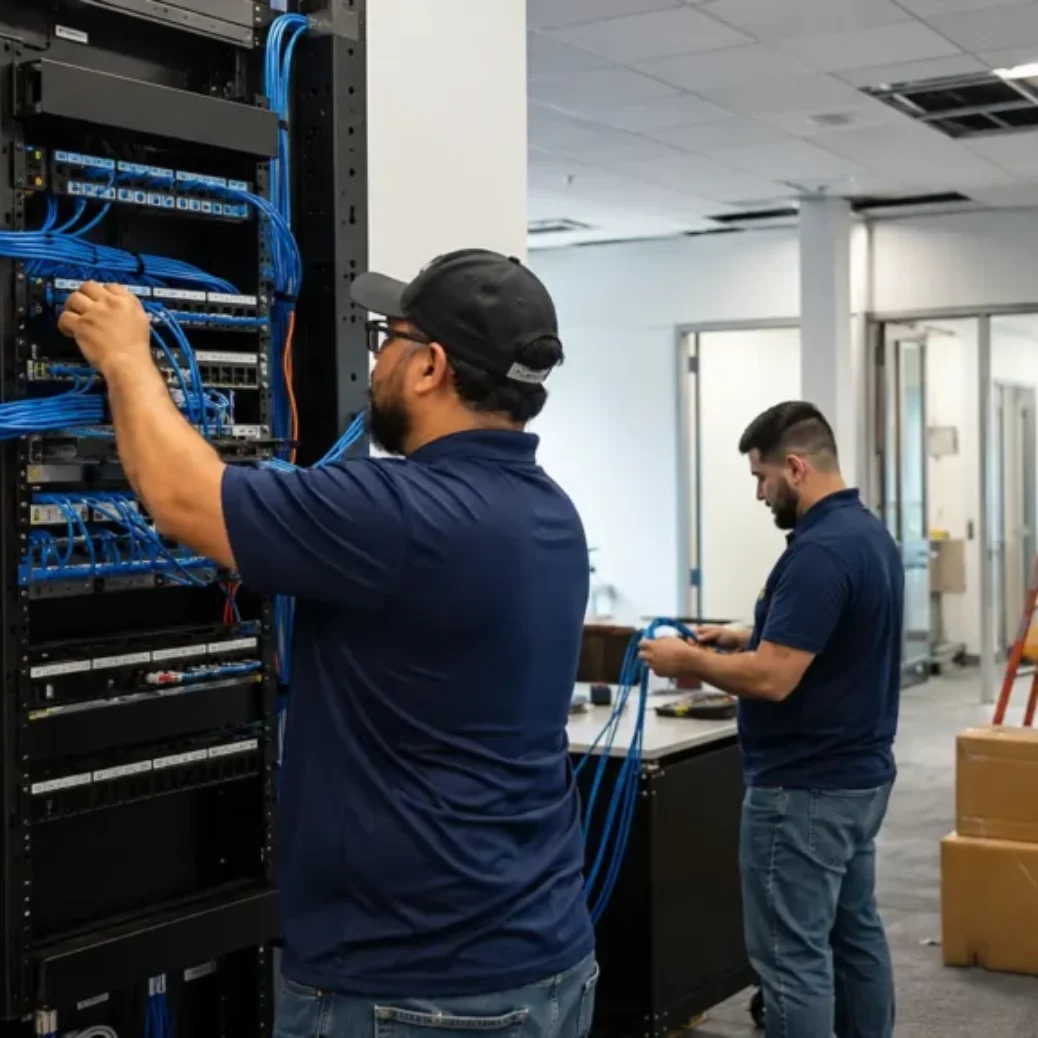
For most standard commercial structured cabling, data cabling, network cabling, and Ethernet installations, the work falls into the “low voltage” category, which generally means systems operating below 50 volts. This includes Cat6 and Cat6A data runs, fiber optic cabling, patch panel terminations, network closet buildouts, and similar projects. Whether that specific scope requires a state electrical license in Texas depends on several factors we will cover in the next section.
The bottom line for a DFW business owner: do not assume a contractor is fully qualified just because they use the word “licensed” in their marketing. Ask specifically what license or registration they hold, what insurance they carry, and whether they are prepared to coordinate with the city or building department if permits are needed.
Does every low voltage cabling job in Texas require a state electrical license?
No. Not every low voltage cabling project in Texas requires a state electrical license, but some related work does. The answer depends on the type of system, the scope of the project, and whether the work crosses into regulated electrical territory.
Texas licensing for electrical work is administered by the Texas Department of Licensing and Regulation (TDLR). The state requires licensed electricians for work on electrical systems that operate above certain voltage thresholds or that involve specific regulated systems. Standard data cabling, network cabling, structured cabling, and fiber optic installations that carry only communication signals at low voltage levels are often not subject to the same state electrician licensing requirements as power wiring.
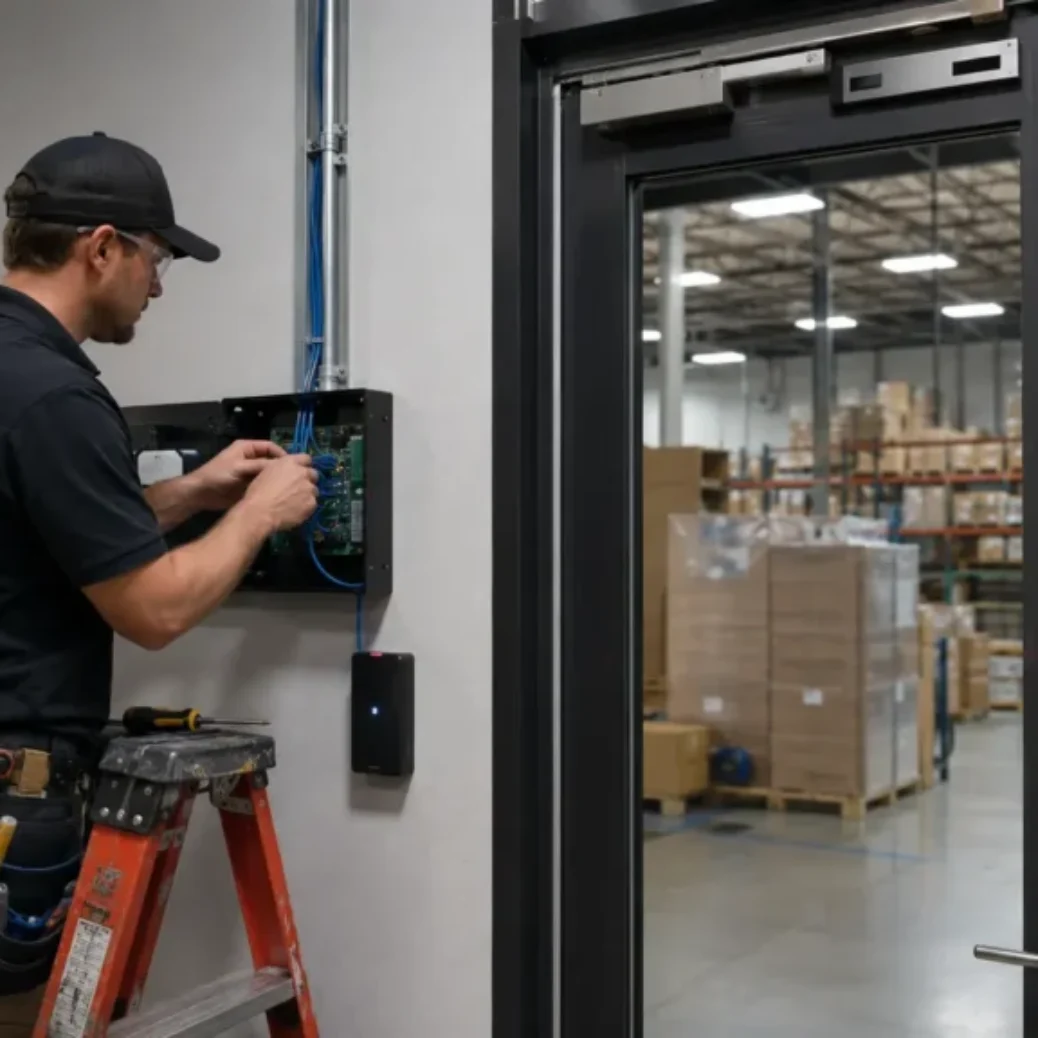
That said, there are situations where a state license or additional credentials may apply. If the cabling project involves fire alarm wiring, access control systems, security alarm systems, or any integration with regulated life safety equipment, different licensing rules can kick in. If the contractor is also doing electrical work, pulling power circuits, or connecting equipment to line voltage, a state electrician license is typically required for that portion.
Here is the part that trips up most business owners: even when a specific cabling scope does not require a state electrician license, the contractor should still be qualified, insured, experienced with commercial work, familiar with local permit processes, and willing to coordinate with the building owner, property manager, or general contractor. A license exemption does not mean a competence exemption. The contractor should be able to explain exactly which credentials apply to their scope and provide documentation.
For commercial projects in Dallas, Fort Worth, Plano, Irving, and other DFW cities, the practical approach is to verify the contractor against the full checklist we cover below, regardless of whether a state electrician license applies to the specific scope.
What should DFW businesses verify before hiring a cabling contractor?
Before approving any quote, DFW business owners should verify the contractor is who they say they are, carries the right coverage, and can handle the specific scope of commercial work being planned. Skipping this step is how buildout delays, landlord disputes, and expensive rework happen.
Start with the basics. Confirm the contractor is a real, registered business entity in Texas. Ask for their legal business name, doing-business-as name if different, and their Texas Secretary of State filing or assumed name registration. This is not about bureaucracy. It tells you whether you are dealing with a legitimate company or a side operation working out of a pickup truck.
Next, verify insurance. Ask for a current certificate of insurance (COI) showing commercial general liability coverage and workers compensation coverage, or a legitimate exemption document if they are a sole proprietor with no employees. Commercial projects in DFW often require contractors to name the building owner, landlord, or property management company as an additional insured. If the contractor cannot produce a COI on request, that is a red flag.
After that, confirm their experience and capability. Have they completed commercial low voltage projects of similar scope? Do they have BICSI-trained technicians on staff? Can they provide references from commercial clients, not just residential jobs? A contractor who mainly does home theater installs is not the same as a team that runs 200 Cat6A drops across a two-story office in Plano or terminates a fiber backbone in a Fort Worth warehouse.
Finally, ask about their documentation and closeout process. A qualified commercial cabling contractor should provide a written scope of work before the project starts, Fluke test results for every cable run, labeled cabling with a clear numbering system, and as-built documentation showing what was installed and where. For more on testing and documentation standards, see our guide to the structured cabling installation process in DFW.
If you are planning a commercial cabling project in Dallas-Fort Worth and want to skip the guesswork, Cabling in DFW can walk through your project scope and provide a compliant, insured quote. Request a free site visit.
How do cabling permits work across Dallas, Fort Worth, and DFW suburbs?
Permit requirements for cabling projects can vary by city, building type, project scope, and whether the work is part of a larger tenant improvement. There is no single DFW-wide rule. Each municipality sets its own permitting expectations, and business owners should verify requirements with the local building department or rely on a contractor who already knows how each city handles low voltage work.
In the City of Dallas, permit expectations for low voltage cabling can depend on the scope of the project and whether it is tied to a larger buildout. Standalone data cabling in an existing office may not always trigger a separate low voltage permit, but if the work is part of a tenant improvement that includes electrical, HVAC, or construction, the cabling scope may fall under the broader building permit. For projects involving fire alarm, security, or access control wiring, permit and inspection requirements become more specific. Business owners working in Dallas should confirm permit requirements with the city or with their general contractor. Our Dallas network cabling services page covers what to expect for commercial cabling projects in the city.
Fort Worth has its own permitting department and its own set of expectations. Do not assume that what applied in Dallas applies identically in Fort Worth. The same goes for Plano, Irving, Carrollton, Frisco, and other DFW suburbs. Each city may have different thresholds for when a permit is required, different inspection processes, and different timelines. Plano, for example, has a well-organized development services department that can provide clear guidance on permit requirements for commercial projects. You can learn more about commercial cabling in Plano on our Plano network cabling services page.
The practical takeaway: a permit-ready contractor is safer than a vendor who tells you “permits are never needed.” The contractor should know how to check with the local building department, should be willing to pull permits when required, and should be able to coordinate with the property manager, landlord, or general contractor on permit responsibility. If a contractor dismisses the question entirely, that is a red flag worth noting.
Why is commercial liability insurance non-negotiable for office cabling projects?
Commercial liability insurance protects the business, landlord, general contractor, and cabling vendor when work is performed above ceilings, in telecom rooms, inside walls, or around active business systems. Without it, a single accident on a job site can create financial exposure for everyone involved.
Think about what happens during a typical commercial cabling project. Technicians are working in ceiling spaces, pulling cable through walls, terminating connections in network closets, and sometimes running cable alongside electrical and HVAC systems. In a Fort Worth warehouse, that might mean working near loading docks and racking systems. In an Irving office, it might mean running cable through a shared plenum space above a drop ceiling. Accidents are uncommon with experienced crews, but they happen. A cable pull that damages a sprinkler line, a ladder incident, a tool that nicks existing wiring. When they do happen, insurance is the difference between a managed situation and a financial disaster.
Most commercial landlords and property managers in DFW require contractors to carry general liability insurance before allowing work in the building. Many also require the contractor to name the building owner as an additional insured on the policy. If your cabling contractor cannot provide this, the landlord may block the project before it starts. That is an avoidable delay.
Workers compensation is the other piece. If a technician is injured on your job site and the contractor does not carry workers comp, the liability can fall on you as the business that hired them. For DFW office buildouts, tenant improvements, and warehouse projects, this is not a minor concern.
Ask for a certificate of insurance before any work begins. Confirm coverage amounts with your property manager or landlord. A qualified commercial contractor will have this ready to send within hours of your request, not days.
What proof should a contractor provide before work starts?
A qualified low voltage cabling contractor should be able to produce documentation proving their identity, insurance, relevant credentials, and project readiness before the first cable gets pulled. If a contractor resists providing these documents, that tells you something about how the rest of the project will go.
Here is what to ask for:
- A written scope of work that describes exactly what is being installed, where the cable runs go, what cable types are being used, how many drops are included, what testing and labeling standards apply, and what the timeline looks like. This protects both sides and prevents scope disputes later.
- A current certificate of insurance showing commercial general liability and workers compensation coverage. Ask whether they can name your landlord or building owner as an additional insured. For tenant improvement projects, this is often a lease requirement.
- Proof of any applicable license or registration. If the scope includes fire alarm, security, or access control wiring, the contractor should hold the appropriate Texas credentials for that work. For standard data, network, and structured cabling, ask about their business registration and any trade affiliations.
- Evidence of commercial experience. References, project photos, or case studies from commercial work in DFW offices, warehouses, medical buildings, or retail spaces. A company that has completed commercial audio and video cabling projects, conference room AV installs, or paging system wiring should be able to show that work.
- A commitment to testing, labeling, and closeout documentation. Every run should be Fluke-tested, every cable should be labeled with a clear numbering system, and the contractor should hand over as-built documentation at project close.
- Warranty terms in writing. Know what is covered, for how long, and what the process is if something fails after the install.
Verification comparison: state licensing vs. municipal permits vs. insurance vs. building requirements
| Verification item | What it proves | Who may require it | Why it matters for DFW businesses | What to ask the contractor |
|---|---|---|---|---|
| State electrical license (TDLR) | Contractor holds a Texas electrical license for regulated work | State of Texas for certain system types | Required when scope involves regulated electrical, fire alarm, or security systems | Does your scope require a state license? Can you show your TDLR credentials? |
| Municipal trade or building permit | City has reviewed and approved the planned work | City building department (varies by city) | May be required for tenant improvements, new construction, or work tied to a larger buildout | Have you checked permit requirements with the city for this project? |
| Commercial general liability insurance | Contractor is covered for property damage and bodily injury on your job site | Landlord, property manager, GC, business owner | Protects you from financial exposure; often a lease requirement for office and warehouse work | Can you send a certificate of insurance? Can you add our landlord as additional insured? |
| Workers compensation coverage | Contractor covers its own workers for on-site injuries | State law and/or business owner | Without it, injury liability can shift to the hiring business | Do you carry workers comp? If exempt, can you provide documentation? |
| Building owner or PM requirements | Work is approved by the property owner or manager | Landlord, property management company | Most DFW commercial leases require landlord approval before any cabling or construction work | Have you coordinated with building management before? What documentation do they usually want? |
| Business registration (TX SOS) | Contractor is a legal business entity in Texas | Business owner due diligence | Confirms you are hiring a legitimate company, not an unregistered side operation | What is your legal business name and Texas registration? |
What are the risks of hiring an uninsured or permit-unready vendor?
The risks fall into three categories: financial, operational, and legal. Any one of them can turn a straightforward cabling project into a months-long headache.
Financial risk is the most obvious. If an uninsured contractor damages property, injures a worker, or causes downtime, there is no insurance to cover the loss. That means the business owner or landlord may be responsible for repair costs, medical bills, or lost revenue. On a commercial office buildout in Dallas or a warehouse project in Carrollton, those costs can stack up fast.
Operational risk comes from failed inspections, delayed move-ins, or rework. If a contractor installs cabling without required permits or approvals, the building department or property manager can require the work to be torn out and redone. We have seen this happen on tenant improvement projects where the general contractor assumed the cabling vendor handled permits, and the cabling vendor assumed the GC handled them. The result: a two-week delay while the permit was obtained and the inspection was scheduled.
Legal risk is less common but more serious. If unpermitted or non-compliant work contributes to a fire, safety incident, or code violation, the liability exposure extends to the business that hired the contractor. For commercial buildings in DFW, especially multi-tenant buildings, schools, and medical offices, code compliance is not optional.
The simplest way to avoid all three risks: verify everything before work starts, not after.
Why DFW businesses choose Cabling in DFW for compliant commercial projects
Cabling in DFW is a licensed, insured, permit-ready commercial cabling company based in Carrollton, TX, serving businesses across Dallas-Fort Worth since 2009. We carry commercial general liability insurance and workers compensation coverage, and we can provide certificates of insurance to landlords, property managers, and general contractors on the same day they are requested.
Our technicians are BICSI-trained and have completed over 400 commercial cabling projects across Dallas, Fort Worth, Plano, Irving, Frisco, and surrounding DFW cities. That includes structured cabling, data cabling, fiber optic installations, network closet buildouts, and commercial audio and video cabling for conference rooms, paging systems, and media displays.
Every cable run is Fluke-tested, labeled, and documented. We provide a written scope of work before the project starts and hand over as-built documentation at closeout. Our 5-year workmanship warranty covers the installation. And when a project requires permit coordination with the city of Dallas, Fort Worth, Plano, or any other DFW municipality, we handle that conversation so you do not have to guess.
For low voltage wiring projects across DFW, that kind of preparation is the difference between a project that goes smoothly and one that stalls.
Final checklist before you approve a low voltage cabling quote
Before you sign a quote or schedule a start date, confirm the following:
- Contractor has provided a legal business name and Texas registration.
- Contractor has sent a current certificate of insurance showing general liability and workers compensation coverage.
- Contractor can name your landlord or building owner as additional insured if required.
- Contractor has explained whether their scope requires a state license, and has provided credentials if applicable.
- Contractor has checked permit requirements with the city or building department for your specific project.
- Contractor has provided a written scope of work with drop counts, cable types, testing standards, timeline, and pricing.
- Contractor has confirmed their testing and labeling process (Fluke testing, numbered labels, as-built documentation).
- Contractor has provided warranty terms in writing.
- Contractor has commercial cabling experience in DFW buildings similar to yours, whether that is an office, warehouse, medical facility, retail space, or multi-tenant building.
- Contractor has references or project examples from commercial work, not just residential jobs.
If any item on this list is missing, ask for it before the project starts. The extra hour of verification can save weeks of rework, dispute, or delay.
Frequently asked questions
What is a Texas low voltage license?
There is no single “Texas low voltage license” that covers all types of low voltage cabling work. The phrase usually refers to state electrician licensing administered by TDLR, which may or may not apply depending on the system type and scope. For standard data, network, and structured cabling, the licensing picture is different than for fire alarm or security wiring. Business owners should ask each contractor specifically what credentials apply to the planned scope of work.
Does low voltage cabling require a license in Texas?
It depends on the system. Standard communications cabling, data cabling, and fiber optic installations may not require a state electrician license in Texas, but work involving fire alarm, security, or access control systems often does. Even when a state license is not required, the contractor should be a registered business, properly insured, and experienced with commercial work. A license exemption does not equal a competence exemption.
Do commercial cabling projects need permits in Dallas-Fort Worth?
Permit requirements vary by city and project scope. In Dallas, standalone low voltage cabling may not always require a separate permit, but work tied to a tenant improvement or larger buildout often falls under the overall building permit. Fort Worth, Plano, Irving, and other DFW suburbs each have their own permitting departments and thresholds. The safest approach is to verify with the city or hire a contractor who already knows the local requirements.
Why should I ask for proof of insurance before hiring a cabling contractor?
Commercial liability insurance protects your business from financial exposure if something goes wrong during the project. Most DFW landlords and property managers require contractors to carry general liability and workers compensation coverage before allowing work in the building. If the contractor cannot provide a certificate of insurance, the project may be delayed or blocked by building management.
What documents should a cabling contractor provide before starting?
At minimum: a written scope of work, a current certificate of insurance, proof of applicable licensing or registration, warranty terms, and a description of their testing and documentation process. For commercial projects in DFW, you should also ask for evidence of commercial experience, BICSI training credentials, and the ability to provide as-built documentation at closeout.
Can a general contractor handle low voltage cabling permits?
On tenant improvement projects, the general contractor often pulls the overall building permit, which may cover the low voltage cabling scope. However, responsibility for permits should be clearly defined in writing before the project starts. On standalone cabling projects without a GC involved, the cabling contractor should handle permit verification directly with the city or building department.
What happens if cabling work is done without required approval?
If the city or building department discovers unpermitted work, the contractor may be required to stop work, obtain the permit, and pass an inspection before continuing. In some cases, the work may need to be partially or fully redone. For commercial buildings, this can delay tenant move-ins, disrupt business operations, and create friction between the business owner, landlord, and GC.
How can Cabling in DFW help with a compliant cabling quote?
Cabling in DFW provides a written scope of work, certificate of insurance, permit coordination, BICSI-trained technicians, Fluke-tested and labeled cable runs, as-built documentation, and a 5-year workmanship warranty on every commercial project. We serve Dallas, Fort Worth, Plano, Irving, Carrollton, Frisco, and the wider DFW metro. Request a compliant, insured quote.
Ready to plan your DFW cabling project?
If your Dallas-Fort Worth business is planning low voltage cabling, AV cabling, a network upgrade, an office buildout, or a warehouse project, Cabling in DFW can review your project scope and help you request a compliant, insured quote before work begins.