
School and Campus Network Cabling in DFW: Classrooms, Wi-Fi Density, and E-Rate Basics

Most school network cabling problems do not start when Wi-Fi drops during state testing week. They start months earlier, when classrooms add more Chromebooks, access points get mounted wherever there is ceiling space, and the network closet still has the same patch panel from 2014. For a Dallas-Fort Worth private school, charter school, or ISD campus planning a technology refresh, the cabling underneath the Wi-Fi matters more than the Wi-Fi itself. This guide covers what school network cabling actually includes, how classroom density and access point placement affect planning, what campus fiber and MDF/IDF closets look like in multi-building schools, how summer scheduling works, what E-Rate may cover, and what to prepare before calling a cabling contractor.
Need a cabling quote for your DFW school or campus?
Cabling in DFW offers free site visits for schools across Dallas-Fort Worth.
What is school network cabling?
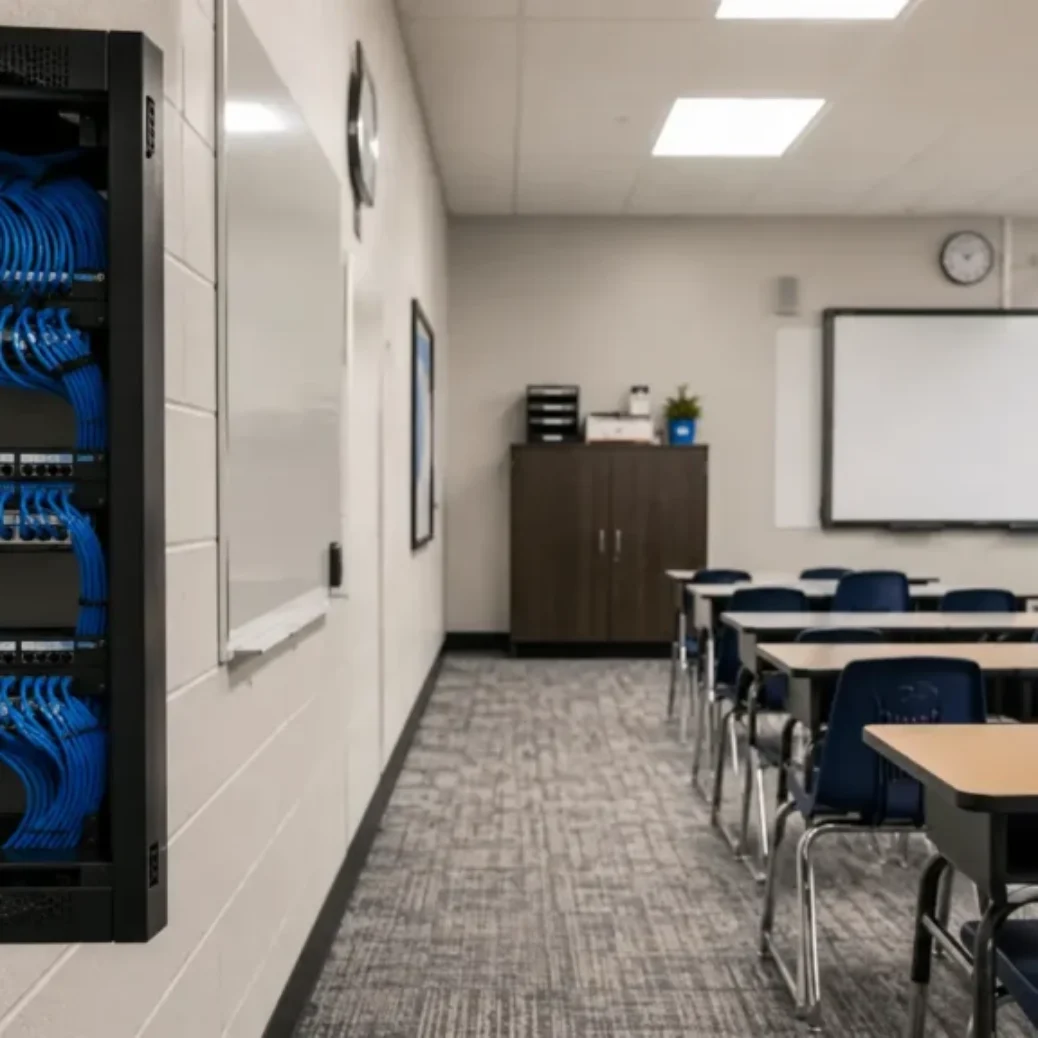
School network cabling is the structured wiring system that connects every classroom, office, media center, and campus building to the network. It includes the Ethernet cable runs from each data drop and access point location back to the network closet, plus the patch panels, racks, backbone cabling between closets, and fiber connections between buildings. Without it, Wi-Fi access points, VoIP phones, security cameras, and wired devices have no way to reach the network, no matter how good the wireless hardware is.
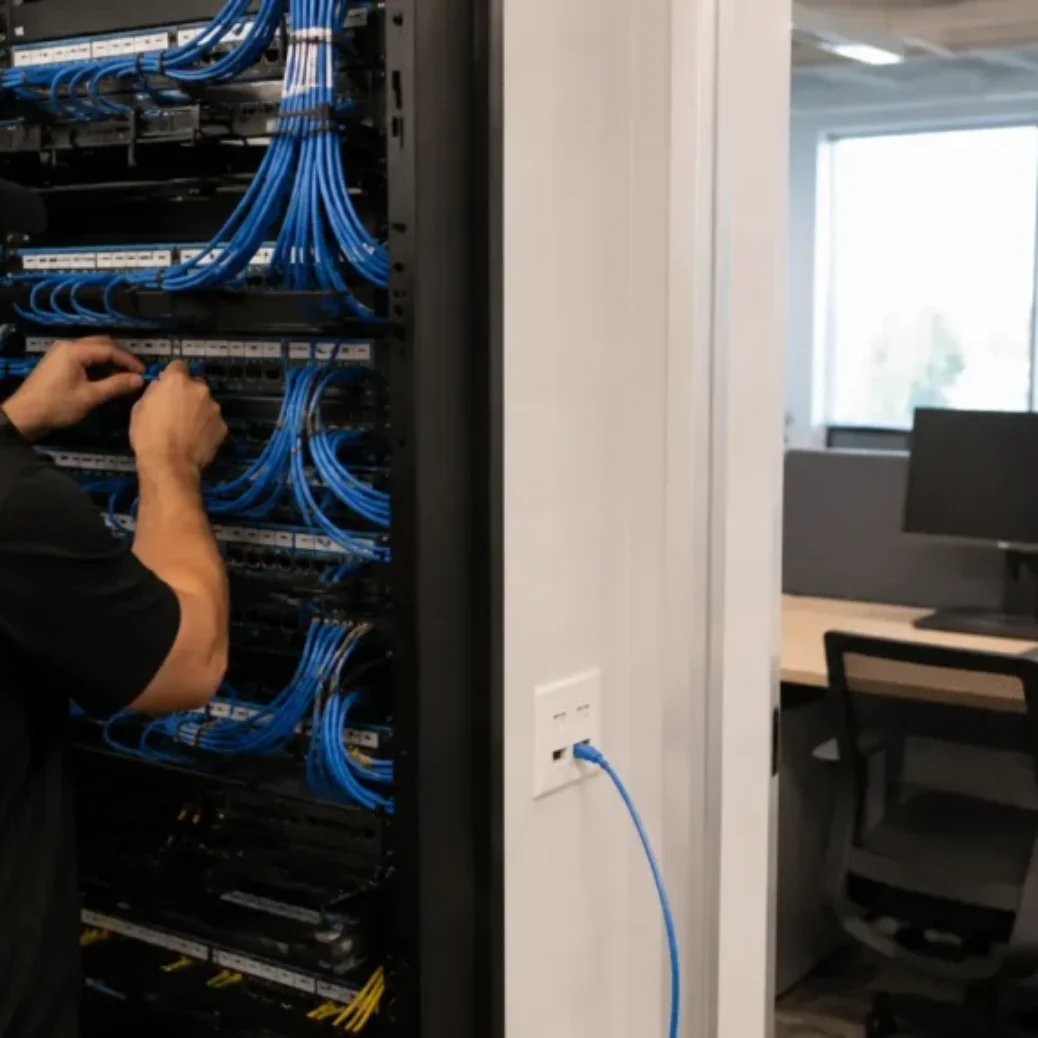
A typical school structured cabling project in Dallas-Fort Worth involves pulling Cat6 or Cat6A cable through ceilings and walls, terminating runs at patch panels in the MDF (main distribution frame) or IDF (intermediate distribution frame) closets, testing every connection with a Fluke DSX tester, and labeling both ends so the school's IT team can manage the network after the install. For a Plano charter school with 30 classrooms, that might mean 90 to 120 cable runs just for access points and teacher drops, not counting cameras, phones, or office equipment.
The cabling is the foundation. Wireless access points, switches, and network gear change every five to seven years. The cable in the walls and ceilings should last 15 to 20 years if it is installed and tested correctly.
Why does classroom Wi-Fi cabling matter for DFW schools?
Classroom Wi-Fi cabling matters because every wireless access point needs a dedicated, tested cable run back to the network closet. Schools cannot get reliable Wi-Fi by only buying better access points. If the cabling behind the access point is untested, improperly terminated, or running on old Cat5e that was never rated for PoE loads, the AP will underperform regardless of the brand.
This is where school environments are different from typical offices. A standard Dallas office might have one access point for every 15 to 20 users. A classroom with 25 to 30 students on Chromebooks, plus a teacher laptop, a display, and a phone, needs an access point that can handle 30-plus simultaneous connections in a single room. Some media centers, cafeterias, and gymnasiums in Frisco or Arlington campuses need two or three APs in one space because of the device count and physical layout.
Each of those access points requires its own home run cable, usually Cat6 or Cat6A, pulled back to the nearest IDF closet. The cable also carries power through PoE (Power over Ethernet), which means the cable quality and termination directly affect whether the AP gets enough wattage to operate at full capacity. A bad crimp or a cable that barely passes testing can cause intermittent drops during peak classroom usage, which is exactly when schools need their network the most.
If your campus is running 1:1 student devices and you have not re-evaluated your access point cabling in the last five years, the cabling may be the bottleneck, not the internet service provider.
How many access points does a school need?
The number of access points a school needs depends on building layout, wall construction, ceiling height, device density per room, and how the campus uses wireless. There is no single formula, but here is a rough planning baseline for DFW schools running 1:1 student device programs.
Standard classrooms with 25 to 30 student devices generally need one access point per room. Larger classrooms or flex spaces that seat 40 or more students may need two. Media centers, libraries, and computer labs that serve multiple classes at once often need two to three APs depending on size. Gymnasiums and cafeterias that host assemblies, testing, or large group activities may need two to four APs mounted at different points in the space. Administrative offices, front offices, and counselor suites usually follow commercial office planning, roughly one AP per 1,500 to 2,000 square feet.
Every one of those access points needs a dedicated cable run. That means a 40-classroom campus with a gym, cafeteria, media center, and admin wing could need 55 to 70 access point cable runs just for Wi-Fi, before counting data drops for printers, phones, cameras, or wired workstations.
The takeaway for Fort Worth ISDs, Dallas private schools, and Carrollton charter campuses: start with the access point count, then plan the cabling around it. Not the other way around.
Planning a campus Wi-Fi upgrade this summer? Cabling in DFW works with schools across Dallas, Fort Worth, Plano, Frisco, and Arlington. We can review your floor plans and help estimate your access point cabling needs before you commit to a quote. Talk to a DFW school cabling expert.
What does campus cabling include for multi-building schools?
Campus cabling is the network infrastructure that connects separate buildings on the same school property. For a DFW school with multiple buildings, a portable classroom wing, a standalone gym, or a detached admin building, campus cabling typically involves fiber optic cable between buildings, separate IDF closets in each structure, and backbone connections from every IDF back to a central MDF.
Here is what that looks like on a real campus project. A Plano charter school with four buildings might have one MDF in the main office building with the core switch and internet connection. Each of the other three buildings gets an IDF closet with its own switch stack, connected back to the MDF with single-mode or multimode fiber. The fiber runs may go through underground conduit, overhead cable tray, or aerial supports between buildings, depending on the site.
Inside each building, the horizontal cabling from classrooms to the IDF is Cat6 or Cat6A. The fiber backbone between buildings is the highway that ties everything together.
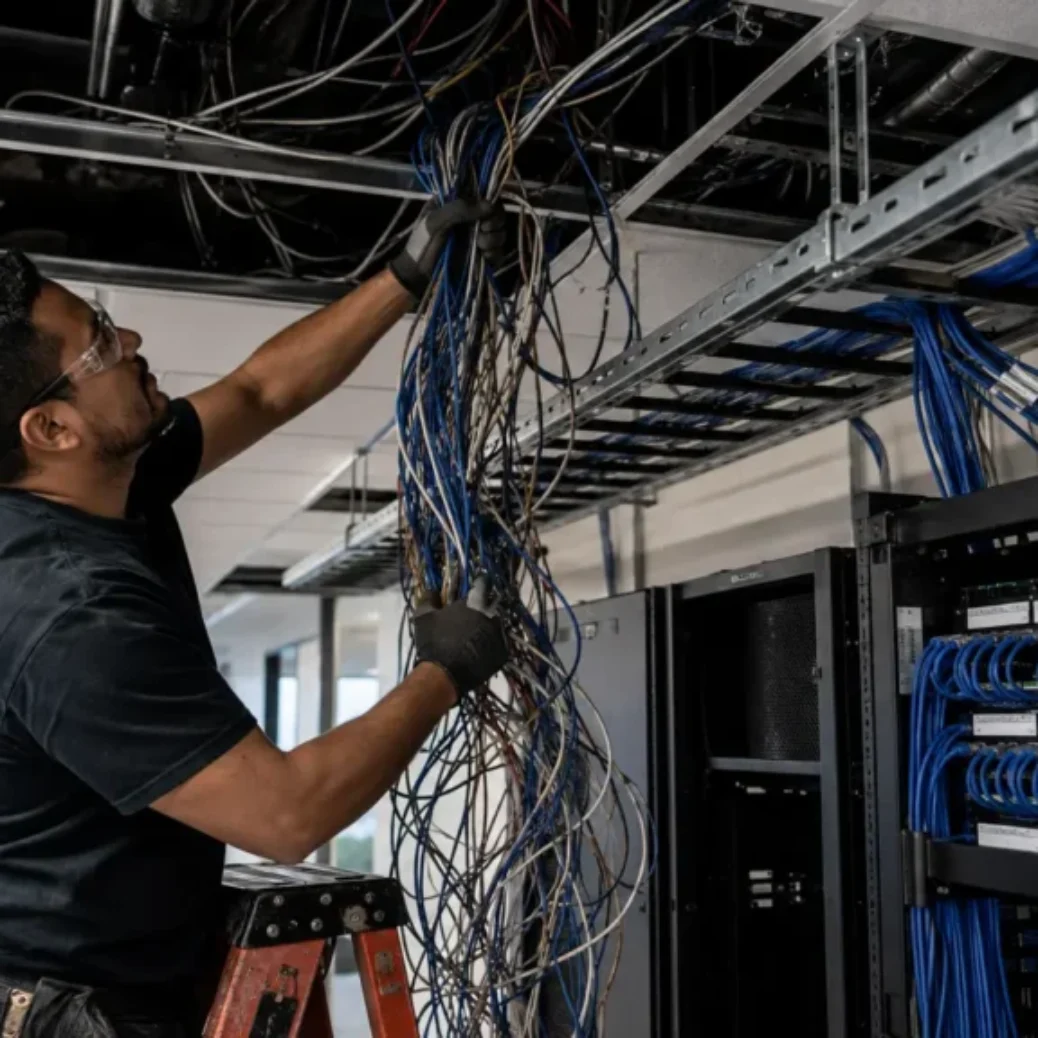
When schools in Irving or Arlington add portables or expand into new wings, the campus fiber backbone often needs an extension. If the original install left spare fiber strands or empty conduit, the expansion is simpler. If it did not, the cabling contractor may need to trench new conduit or run aerial fiber, which adds cost and planning time.
This is one area where getting the backbone right during the original build saves money later. Pulling extra fiber strands during the initial install costs a fraction of what re-trenching costs two years down the road. Schools working with structured cabling installers should ask about spare capacity in the fiber backbone during the planning phase.
Cat6 vs Cat6A vs fiber for school environments
Schools and ISDs across DFW often ask whether they need Cat6, Cat6A, or fiber. The answer depends on where the cable is going and what it is connecting. Here is a quick comparison for school environments.
| Factor | Cat6 | Cat6A | Fiber (single-mode) |
|---|---|---|---|
| Max speed | 10Gbps up to 55 meters | 10Gbps up to 100 meters | 10Gbps+ over kilometers |
| Best use in schools | Classroom drops, office runs, cameras | High-density AP runs, AV, future-proofing | Building-to-building backbone, MDF to IDF |
| PoE support | PoE and PoE+ | PoE, PoE+, PoE++ (Type 3/4) | No (requires media converter) |
| Cable diameter | Smaller, easier pulls | Larger, needs more pathway space | Small, but requires careful handling |
| Cost per run | Lower | 10-20% more than Cat6 | Higher install cost, lower cable cost per foot |
| When to choose | Standard classrooms, offices | New builds, Wi-Fi 6E/7 APs, labs | Between buildings or closets over 90 meters apart |
Most DFW school cabling projects use a mix. Cat6 or Cat6A for the horizontal runs inside buildings, and fiber for the backbone between buildings or between floors. The right choice depends on your campus layout, current AP hardware, and how long you want the cabling to last before the next upgrade. For more on choosing between cable types for commercial environments, see fiber vs copper cabling for Dallas offices.
When should DFW schools schedule network cabling projects?
Most school cabling projects in Dallas-Fort Worth need to be completed during summer break, which means the planning has to start months earlier. A summer installation window for a typical DFW school district runs roughly from early June through late July, depending on teacher workdays, summer programs, and move-in schedules. That window shrinks fast when you factor in site walkthroughs, floor plan reviews, quoting, approvals, materials ordering, and scheduling with other trades.
Here is a realistic timeline for a DFW school cabling project. By February or March, the school's IT director or facility manager should have a general scope defined: how many classrooms need new drops, how many access points are planned, whether the MDF or IDF closets need upgrades, and whether any fiber backbone work is involved. By April, you want a contractor on site for a walkthrough and a formal quote. By May, materials should be ordered and the project should be scheduled.
Schools that wait until June to start the process often find that summer is already booked. Cabling contractors, electricians, flooring crews, painters, and furniture vendors are all competing for the same six to eight week window. Schools in Frisco, Plano, and Arlington that plan ahead get better scheduling priority and avoid the rush.
One more thing to keep in mind: school buildings have specific access rules. Background checks for contractors, after-hours access, alarm codes, coordination with custodial staff, and restrictions on areas near summer school classrooms all add complexity. A cabling contractor who has worked in DFW schools before will already know these requirements.
School network cabling planning checklist before summer break
Use this checklist to stay on track before the school year ends.
- Identify which buildings, wings, or classrooms need new cable runs or access point drops.
- Count the total number of data drops, AP locations, and camera positions you need.
- Review MDF and IDF closet capacity: rack space, power, cooling, patch panel ports.
- Confirm whether fiber backbone between buildings needs new strands or conduit.
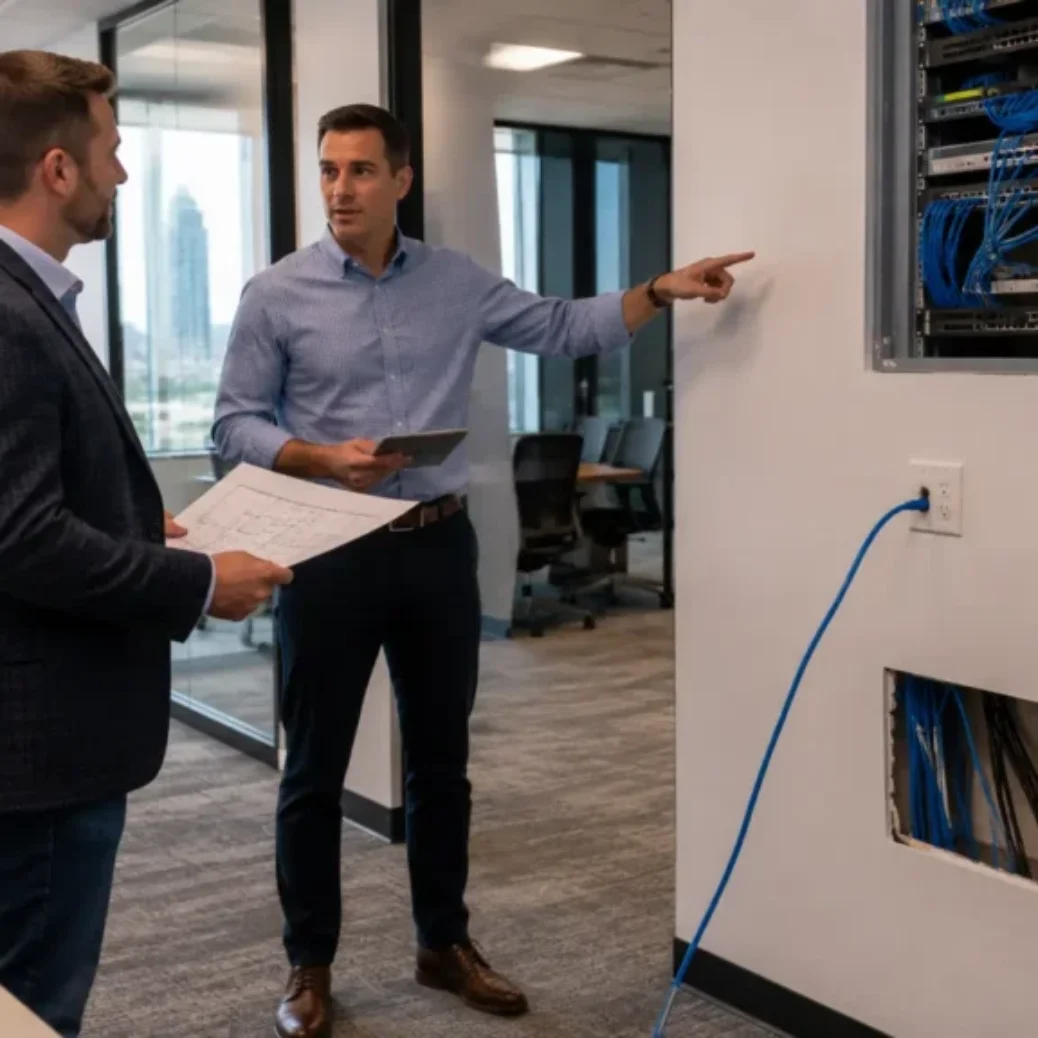
- Request floor plans or as-built drawings for the campus.
- Schedule a site walkthrough with a cabling contractor by April.
- Get a formal quote and confirm scope, cable type (Cat6 vs Cat6A), and testing standards.
- Order materials early. Lead times on Cat6A cable, patch panels, and racks can stretch to three to four weeks.
- Coordinate with other summer trades: painters, electricians, flooring, furniture, access control.
- Confirm contractor background check requirements and campus access procedures.
- Set a firm completion deadline that leaves time for IT to configure switches and APs before teachers arrive.
- Budget for testing and documentation: every run should be Fluke tested, labeled, and mapped.
Can E-Rate help pay for school cabling?
E-Rate is a federal program administered by USAC (Universal Service Administrative Company) that may help eligible schools and libraries receive discounts on broadband and internal network infrastructure. For DFW schools planning a cabling project, E-Rate Category Two funding can potentially cover a portion of internal connections, which includes items like network switches, wireless access points, and the cabling required to connect them inside eligible buildings.
The discount level depends on the school's percentage of students eligible for free or reduced-price lunch and whether it is in a rural or urban area. DFW schools typically receive discounts ranging from 20% to 80% or more on eligible Category Two services.
Here is what school administrators and IT directors should know about E-Rate and cabling. Cabling that distributes broadband within a school building, such as Cat6 or Cat6A runs from the IDF closet to access point locations, may be eligible as an internal connection. The school must follow a competitive bidding process (posting a Form 470), select a vendor through a documented process, and file the necessary applications within the correct funding year timelines.
E-Rate does not guarantee approval for any specific project, and the rules change from year to year. Schools should work with their E-Rate consultant or filing agent to confirm which services are eligible, what documentation is needed, and what deadlines apply. This blog is not legal, financial, or procurement advice. It is planning context to help administrators ask the right questions earlier in the process.
For more detail on how structured cabling fits into a full network build, see the structured cabling installation process for DFW businesses.
What affects school network cabling cost in DFW?
School network cabling cost depends on the number of cable runs, the cable type (Cat6 vs Cat6A), the length of runs from classroom to closet, the condition of existing pathways and conduit, the number of IDF closets and rack installations needed, whether fiber backbone work is included, testing and labeling requirements, and scheduling constraints related to the academic calendar.
A small charter school in Carrollton with 15 classrooms and one network closet will cost significantly less than a multi-building ISD campus in Arlington with 60 classrooms, three IDF closets, and a fiber backbone between buildings.
A few factors drive cost up in school projects specifically. Summer-only installation windows compress schedules and may require overtime. Older buildings with limited ceiling access, concrete block walls, or no existing conduit take longer to cable. Schools that need plenum-rated cable (which is required in most commercial ceiling spaces used for air handling) pay more per foot than schools with riser-rated areas. And campuses that require background checks, after-hours access coordination, or phased installation around summer programs add administrative complexity.
The best way to get an accurate number is to bring a contractor on site for a walkthrough. A data cabling installation quote based on floor plans and a site visit will be far more reliable than any estimate based on square footage alone.
What mistakes should schools avoid with network cabling?
The most common school cabling mistake is treating cabling as an afterthought. Schools buy access points, switches, and wireless controllers, then realize they do not have enough cable runs to support them. By then, summer is half over and the project becomes a rush job. Here are the mistakes we see most often across DFW school projects.
Not counting access point locations before cabling. The AP plan should come first. The cabling plan follows. If you cable first and plan APs later, you end up with drops in the wrong locations, extra cable runs, and wasted money.
Ignoring network closet capacity. A school that adds 40 new cable runs to a closet with a 24-port patch panel and no rack space will need a closet upgrade before any of those runs are usable. Check closet capacity early.
Running Cat5e for new access point drops. Cat5e still works for basic data, but it does not support PoE++ or 10Gbps. If you are installing Wi-Fi 6 or Wi-Fi 6E access points, Cat6 is the minimum. Cat6A is the better choice for longevity.
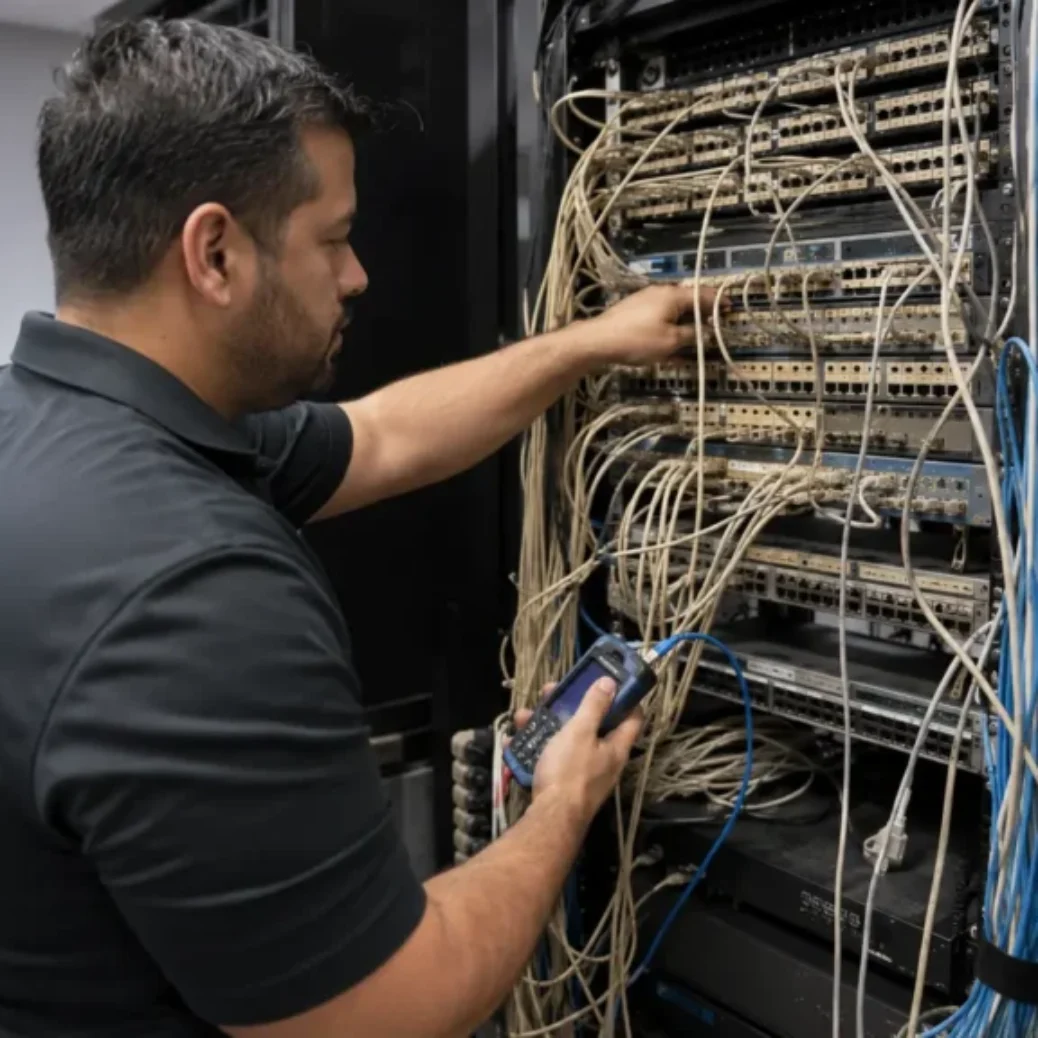
Skipping testing. Every cable run in a school should be Fluke tested and certified. Untested cabling causes intermittent problems that are expensive to troubleshoot during the school year. Learn more about common cabling mistakes DFW businesses make.
Waiting until June to start planning. Summer cabling windows fill up fast. Schools that begin planning in February or March get better scheduling, more contractor options, and time to handle unexpected issues.
How should DFW schools choose a cabling contractor?
Choosing a school cabling contractor is different from hiring a residential electrician or a general IT company. Schools need a contractor with commercial structured cabling experience, familiarity with campus environments, and the ability to work around academic schedules. Here is what to look for.
Ask whether the company has BICSI-trained technicians. BICSI is the industry standard for structured cabling design and installation, and it means the crew understands TIA cabling standards, proper termination techniques, and testing protocols.
Ask for references from other school or campus projects. A contractor who has worked in DFW private schools, charter schools, or ISD buildings will understand the access requirements, scheduling constraints, and coordination with school IT teams that general commercial contractors may not.
Confirm that every run will be Fluke tested, labeled, and documented. Ask to see a sample test report. If the contractor cannot produce one, that is a red flag.
Verify insurance, licensing, and bonding. Schools have liability requirements that residential or small-commercial contractors may not meet.
Ask about warranty coverage. A 5-year workmanship warranty is standard for professional low voltage wiring contractors. Anything less deserves follow-up questions.
Why DFW schools choose Cabling in DFW
Cabling in DFW is a Dallas-Fort Worth commercial low voltage cabling company based in Carrollton, TX. We have completed over 400 commercial cabling projects across DFW, including school campuses, private schools, charter schools, office buildings, warehouses, medical offices, and multi-building facilities.
BICSI-trained technicians. Every tech on our crew is trained to BICSI standards for structured cabling installation.
Tested and documented installs. We Fluke-test every cable run with a DSX CableAnalyzer and provide full documentation before we close out the project.
Licensed, bonded, and fully insured. We carry the insurance coverage that schools and ISDs require for campus work.
5-year workmanship warranty. If it fails because of our installation, we fix it. No asterisks.
DFW-local. Based in Carrollton, we serve Dallas, Fort Worth, Plano, Frisco, Arlington, Irving, and the surrounding metro. We are not dispatching from out of state.
If your school or campus needs Ethernet cabling installation, Wi-Fi access point cabling, fiber backbone work, or a full network closet buildout, we can walk the site and give you a clear plan before any cable gets pulled.
Frequently asked questions about school network cabling
How much does school network cabling cost in DFW?
Cost varies based on the number of cable runs, cable type (Cat6 vs Cat6A), run length, closet upgrades needed, and whether fiber backbone work is included. A small charter school with 15 classrooms will cost far less than a multi-building ISD campus. The best way to get a real number is a site visit and walkthrough with a commercial cabling contractor.
Can schools install cabling during the school year?
Small projects, like adding a few drops in an admin office, can sometimes be done during the school year with after-hours scheduling. Larger projects involving classroom ceilings, hallway runs, or closet upgrades are much easier and less disruptive during summer break when students and staff are not present.
Does every classroom need its own access point?
In most 1:1 device environments, yes. A classroom with 25 to 30 students on Chromebooks or laptops needs a dedicated access point to handle the device density. Larger spaces like gyms and media centers may need more than one. The access point plan should be set before the cabling plan, not after.
What cable type is best for school access point runs?
Cat6 is the minimum for current Wi-Fi 6 access points. Cat6A is the better choice if the school plans to use Wi-Fi 6E or Wi-Fi 7 hardware, or if you want the cabling to support 10Gbps and higher PoE standards for the next 10 to 15 years.
What is an MDF and IDF in a school?
The MDF (main distribution frame) is the primary network closet where the internet connection, core switch, and main patch panels are located. An IDF (intermediate distribution frame) is a secondary closet in another building or wing that connects back to the MDF, usually through fiber. Most multi-building campuses have one MDF and one or more IDFs.
Does E-Rate cover cabling?
E-Rate Category Two may cover cabling when it is part of internal connections distributing broadband within eligible school buildings. The specific eligibility, discount level, and filing requirements should be confirmed with the school's E-Rate consultant and official USAC resources. E-Rate does not guarantee approval.
How long does a school cabling project take?
A 20 to 30 classroom campus with one or two closets typically takes one to two weeks for cabling, termination, and testing. Larger multi-building projects with fiber backbone and closet buildouts can take three to four weeks. Timeline also depends on other summer construction trades and campus access scheduling.
Should our school use Cat6 or Cat6A?
For new cable runs supporting wireless access points, Cat6A is worth the cost increase. It supports 10Gbps at full 100-meter distances and handles higher PoE wattage with less heat. For standard office drops and printer connections, Cat6 is still a solid choice. Most new school builds in DFW use Cat6A for AP runs and Cat6 for general data drops.
Ready to plan your school's cabling project?
Whether your DFW campus needs classroom access point cabling, a fiber backbone between buildings, a full network closet buildout, or a summer cabling install on a tight schedule, Cabling in DFW can walk the site and give you a straight plan.