
Why Single-Mode Cabling Dominates Modern Data Centers?

As businesses continue upgrading their networks in 2026, one common challenge many IT managers and network engineers face is ensuring compatibility between older cabling systems and newer network infrastructure. The big question often asked is:
Can you use Cat5e cable in a Cat6 patch panel?
For companies planning LAN upgrades, expansions, or structured cabling overhauls, this question is more than theoretical — it can directly impact performance, cost, and long-term scalability.
In this detailed guide, we’ll explore compatibility between Cat5e and Cat6 components, share expert tips from professional Ethernet cable installers, and explain how businesses can maintain reliable, high-speed connectivity while optimizing for future network demands.
Understanding the Basics: Cat5e vs. Cat6 Cables
When it comes to building or upgrading your office network, choosing the right Ethernet cable is crucial. Both Cat5e and Cat6 are among the most widely used cabling types in business environments, each designed to handle specific levels of performance and bandwidth.
What Is Cat5e Cable?
Cat5e (Category 5 Enhanced) cables are known for their affordability and stable performance in small to mid-sized business networks. They can support speeds up to 1 Gbps and bandwidth up to 100 MHz, making them suitable for everyday tasks like VoIP calls, file sharing, and video conferencing.
When professionally installed, Cat5e cables minimize crosstalk and interference, ensuring smooth communication between devices. This makes them a practical choice for businesses with moderate data needs or as a transitional solution before a full Cat6 upgrade.
What Is Cat6 Cable?
Cat6 (Category 6) cables are engineered for higher performance and more demanding environments. They support up to 10 Gbps speeds (over shorter distances) and a bandwidth of 250 MHz, offering significantly better protection against signal interference and crosstalk.
Cat6 cabling installation is ideal for organizations using cloud applications, large file transfers, or real-time data systems. Many companies partner with experienced data cabling companies or structured cabling installation services to manage Cat6 upgrades efficiently, ensuring proper termination and compliance with performance standards.
Key Differences Between Cat5e and Cat6
| Feature | Cat5e | Cat6 |
|---|---|---|
| Maximum Speed | 1 Gbps | 10 Gbps (short distances) |
| Bandwidth | 100 MHz | 250 MHz |
| Crosstalk | Moderate | Low |
| Best For | Small offices, basic internet use | High-speed LAN, data centers |
| Upgrade Value | Cost-effective | Future-proof and scalable |
Selecting between Cat5e and Cat6 ultimately depends on your network requirements, growth projections, and available budget. Many modern structured cabling projects combine both cable types strategically to balance cost and performance.
What Is a Cat6 Patch Panel — and Why It Matters
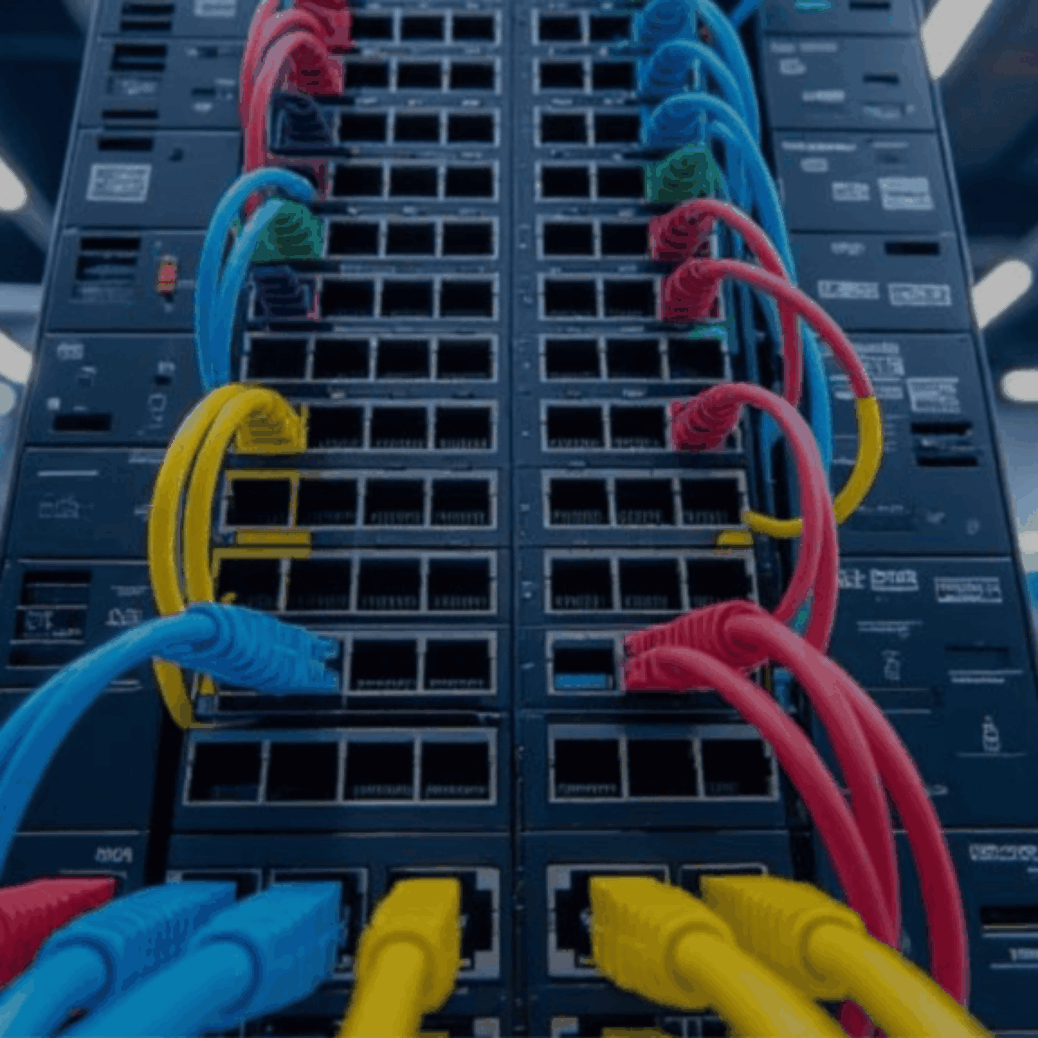
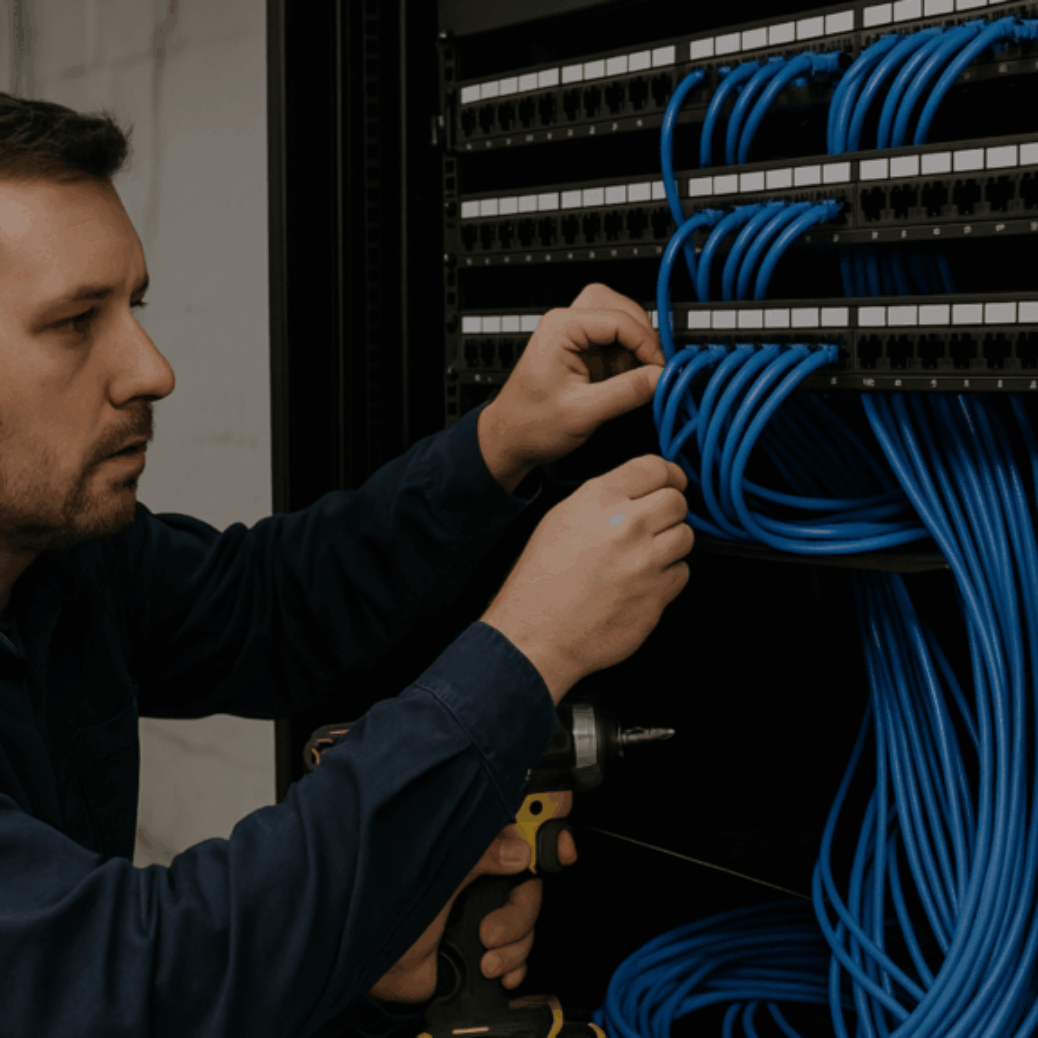
A Cat6 patch panel acts as the centralized hub for network connections in offices, data centers, and server rooms. It organizes multiple Ethernet cables into a single location, making it easier to manage, troubleshoot, and upgrade your network infrastructure.
When installed by professional Ethernet cable installers, each cable is properly terminated, labeled, and tested to meet performance standards. This structured approach helps:
-
Reduce downtime and signal loss
-
Simplify network troubleshooting
-
Support high-speed data transfer
-
Prepare for future scalability
An additional advantage of Cat6 patch panels is backward compatibility — meaning they can support older cable types such as Cat5e, provided the overall system is installed and terminated correctly.
Can You Use Cat5e Cable in a Cat6 Patch Panel?
Yes — but with conditions.
Using Cat5e cables in a Cat6 patch panel is technically possible and functionally safe. This setup maintains backward compatibility, meaning your existing Cat5e infrastructure can connect through newer Cat6 panels without physical or wiring conflicts.
However, the system will only perform to the lowest category rating — in this case, Cat5e standards. So, while the connection works, you won’t achieve the full Cat6 bandwidth or speed capabilities.
Businesses often choose this mixed configuration temporarily during phased LAN upgrades — allowing them to modernize gradually without replacing every cable at once.
Benefits of Using Professional Ethernet Cable Installers
Professional installers bring technical precision, adherence to industry standards, and extensive field experience that DIY setups often lack. When businesses hire certified Ethernet installers or a trusted data cabling company, they gain:
-
Accurate patch panel wiring: Ensures signal integrity and reduced interference
-
Efficient network layout: Proper labeling and organization simplify maintenance
-
Compliance with standards: Aligns with TIA/EIA and BICSI guidelines
-
Future-ready setup: Easier migration from Cat5e to Cat6 without disruption
A structured and methodical installation ensures your LAN remains efficient, scalable, and compliant with enterprise-grade performance benchmarks.
Purpose of a Patch Panel in Structured Cabling
Patch panels form the backbone of structured cabling installation services. In large offices or data centers, they centralize all connections, reducing cable clutter and simplifying upgrades.
With a well-designed patch panel system, IT teams can reroute, add, or replace connections without disturbing the overall network — a critical advantage for minimizing downtime.
This centralization not only improves network management but also supports scalability, allowing companies to accommodate future devices or technologies without starting from scratch.
Backward Compatibility Explained
One of the biggest advantages of modern cabling infrastructure is backward compatibility — the ability of newer hardware (like a Cat6 patch panel) to support older cable types such as Cat5e.
This feature helps businesses upgrade networks in phases rather than replacing everything at once, saving both time and cost. However, while backward compatibility ensures connectivity, it does not enhance performance beyond the Cat5e cable’s limitations.
For example, even though your Cat6 patch panel can physically connect with Cat5e cables, the maximum performance remains at Cat5e’s 1 Gbps speed and 100 MHz bandwidth. The connection’s weakest component always determines its overall capability.
So, while this setup is perfectly functional, businesses relying on high-bandwidth applications — like real-time data processing, large-file transfers, or video conferencing — may experience slower performance if Cat5e remains part of the network.
When Backward Compatibility Works Well
Backward compatibility is particularly helpful in the following real-world scenarios:
-
Small office LAN upgrades – Businesses with modest network needs can temporarily run Cat5e cables through Cat6 patch panels without noticeable slowdowns.
-
Budget-conscious projects – Companies managing tight budgets can reuse existing Cat5e wiring while gradually planning a full Cat6 or Cat6A upgrade.
-
Temporary or phased expansions – Organizations undergoing renovations or moving offices can maintain continuity using Cat5e cabling until new Cat6 lines are ready.
When It Becomes a Limitation
However, backward compatibility has its downsides.
-
Reduced throughput – You’ll never achieve Cat6-level speeds with Cat5e in the system.
-
Potential bottlenecks – In high-traffic environments, Cat5e may limit performance for data-intensive applications.
-
Long-term inefficiency – Over time, mixed systems are harder to maintain and may increase troubleshooting costs.
For businesses experiencing heavy network usage or planning for growth, a complete Cat6 structured cabling installation is a far better long-term investment.
Step-by-Step Guide: Using Cat5e in a Cat6 Patch Panel
If your business chooses to use Cat5e cables in a Cat6 patch panel during upgrades, proper installation is crucial. Here’s how professional Ethernet cable installers approach it:
1. Prepare Tools and Materials
Before starting, ensure your team has the right tools for a clean, reliable installation.
Essential items include:
-
Cable testers – Verify signal strength and continuity.
-
Punch-down tools – Securely seat wires into patch panel slots.
-
Wire strippers – Remove outer insulation without damaging internal conductors.
-
Labels and markers – Keep every connection clearly identified.
Professional technicians always follow structured cabling installation standards to avoid costly rewiring later.
2. Terminate the Cables Correctly
Precise cable termination ensures performance stability and reduces interference.
Steps include:
-
Strip the cable jacket carefully, keeping wire pairs intact.
-
Follow T568A or T568B color-coding to align each wire correctly.
-
Use punch-down tools to seat the wires firmly into the Cat6 patch panel.
-
Trim excess wire to maintain a clean, uniform layout.
These small details matter — poor termination is one of the leading causes of signal loss and cross-talk in LAN environments.
3. Test Every Connection
Once cables are terminated, every connection should be tested for accuracy and signal integrity. Professional installers use:
-
Certification testers to check wiring configuration, continuity, and impedance.
-
LAN analyzers to verify throughput, bandwidth, and packet transmission quality.
Testing ensures that your mixed Cat5e-Cat6 system meets the minimum performance requirements and can be upgraded later with minimal disruption.
How Professional Ethernet Cable Installers Add Value
In-house installations may seem cost-effective, but they often miss the subtleties that define long-term network reliability.
Partnering with an experienced data cabling company brings measurable benefits:
-
Performance assurance: Certified installers guarantee compliance with EIA/TIA performance standards.
-
Reduced downtime: Professional labeling and documentation simplify maintenance.
-
Scalability: The network can easily evolve to Cat6A or fiber optic systems in the future.
-
Aesthetic and safety compliance: Proper cable routing, fire-safety adherence, and code compliance ensure professionalism in appearance and performance.
By trusting experts, businesses not only reduce network errors but also extend the life of their cabling infrastructure — a key EEAT principle demonstrating trustworthiness and professional credibility.
Common Mistakes to Avoid
Even with backward compatibility, installation errors can drastically reduce efficiency. Avoid these frequent mistakes:
-
Mixing cable categories without labeling – Always tag Cat5e lines when combined with Cat6 components.
-
Excessive untwisting of pairs – This introduces interference and weakens transmission quality.
-
Skipping post-installation testing – Visual inspection isn’t enough; certification tools are essential.
-
Improper bend radius – Tight bends can cause data loss and long-term cable degradation.
Following structured cabling best practices helps maintain both performance and safety across your entire network.
Future-Proofing Your Business Network
The rapid evolution of technology means network infrastructure should always be built with scalability in mind. If your company is still running Cat5e lines, consider a planned transition to Cat6 or Cat6A to meet future data requirements.
Upgrading today ensures compatibility with:
-
Advanced VoIP systems
-
Smart office automation
-
Cloud-based workloads and remote access
-
Higher-speed switches and routers
Even if Cat5e meets your current needs, a phased upgrade strategy protects your business from unexpected limitations down the road.
Frequently Asked Questions (FAQs)
1. How do I test if my Cat5e termination is correct?
Professional Ethernet cable installers use certification testers to verify continuity, wiring accuracy, and signal strength for each run. These tools identify performance issues long before they impact productivity.
2. When should I consider upgrading to full Cat6 cabling?
If your business depends on cloud computing, high-definition video calls, or large data transfers, upgrading to Cat6 structured cabling ensures faster speeds and future scalability.
3. Can Cat5e and Cat6 cables be mixed in the same network?
Yes, they can coexist safely using backward compatibility. However, your network’s performance will be limited to Cat5e’s specifications. Mixing should only be temporary during staged upgrades.
4. Does using Cat5e in a Cat6 patch panel affect warranty or certification?
Many manufacturers still honor warranties when lower-grade cables are used, as long as installation meets performance standards and proper testing is done. Always confirm with your vendor.
5. What is the lifespan of Cat5e vs. Cat6 cabling?
Both can last over 10 years with professional installation and maintenance, but Cat6 provides a longer viable life due to higher bandwidth capacity.
Expert Insight: The Real-World Trade-Off
From an engineering perspective, using Cat5e in a Cat6 patch panel is a practical solution for transitional networks.
-
It saves immediate costs, allowing gradual upgrades.
-
It ensures consistent connectivity across legacy and modern systems.
-
But it limits top-end performance to Cat5e’s capacity.
Therefore, while compatibility makes this combination viable, it’s not ideal for long-term growth.
Most certified installers recommend a full Cat6 upgrade once the business budget allows — ensuring better shielding, reduced cross-talk, and compliance with the latest data standards.
Upgrade Your Network the Right Way
Upgrading your business network doesn’t have to mean downtime or confusion. Whether you’re planning a Cat5e to Cat6 transition, expanding your office, or optimizing your patch panel layout, professional help makes all the difference.
Cabling in DFW specializes in:
-
Structured cabling installation services
-
Cat5e and Cat6 cable installation
-
Patch panel wiring and LAN upgrades
-
Enterprise-grade network optimization
Our certified Ethernet cable installers design future-ready systems tailored to your business needs.
📞 Contact us today to schedule a consultation and ensure your next network upgrade delivers speed, reliability, and peace of mind.
Final Thoughts
Yes — you can use Cat5e cables in a Cat6 patch panel, but the connection will perform at Cat5e’s standard.
Professional installation, testing, and planning remain the keys to success.
By understanding backward compatibility, working with skilled data cabling professionals, and planning a structured upgrade, your business network will stay reliable, scalable, and future-proof for years to come.

CORPORATE OFFICE
1509 W Hebron Parkway
Suite Number 150
Carrollton, TX 75010