Summary: Underground fiber optic cable installation in Dallas can vary widely depending on distance, trenching or directional boring, conduit needs, fiber type, building access, permits, restoration, termination, splicing, and testing. For commercial projects, the biggest cost drivers are usually the pathway, labor, site conditions, and whether the fiber needs to connect buildings, warehouses, offices, data rooms, or outdoor facilities. A site visit is usually needed before giving an accurate quote.
Why Dallas Businesses Install Underground Fiber Optic Cable
Most businesses do not think about underground fiber until something breaks or a new project forces the question. Then they find out their existing copper cabling cannot handle the distance. Or their two buildings cannot communicate reliably. Or they are opening a second suite and the IT manager says the signal will not reach.
Underground fiber solves problems that copper cabling simply cannot.
In the Dallas-Fort Worth area, the most common reasons a business reaches out for underground fiber work include:
- Multi-building office parks where each building needs its own network connection that does not depend on wireless bridges
- Warehouses and distribution centers that need reliable backbone connectivity from the main office to shipping areas, security gates, or access points across large footprints
- Medical and dental offices with imaging systems, patient records, and VoIP that need dedicated, high-bandwidth network paths
- Data centers and server rooms that require clean, tested fiber connections with documented performance
- Schools and corporate training centers connecting classrooms, labs, and admin buildings
- Security camera networks where cameras are installed far from the main DVR or NVR location
- Backup internet pathways or dedicated network routes that bypass existing conduit or aging cable plant
Fiber is also the right call when distance makes copper impractical. Standard Cat6 Ethernet has a 100-meter distance limit for full gigabit performance. Once your run exceeds that, such as across a parking lot, between two buildings, or from a main office to a detached warehouse, fiber stops being an upgrade and starts being the obvious solution.
The scalability point matters too. Fiber installed properly today can support the speeds your business may need five years from now. Copper often cannot.
Average Underground Fiber Optic Cable Installation Cost in Dallas
There is no accurate answer to “how much does underground fiber cost” without someone physically walking the site.
That is not a dodge. It is simply the reality of how this type of work gets priced.
Underground fiber installation in Dallas is quoted based on a combination of factors: the route distance, what is already in the ground, what needs to go in, whether the pathway crosses concrete or asphalt, how many fiber strands the project needs, what the termination and testing scope looks like, and what kind of restoration the site requires after the work is done.
General cost context puts underground trenching in a range based on linear footage, conduit, labor, and restoration. But those figures assume a relatively clean route. Real commercial projects in Dallas rarely work that way.
| Cost Factor | Why It Matters |
| Linear footage | More distance means more cable, conduit, pulling time, and testing. |
| Trenching vs boring | Boring costs more upfront but may save on restoration. |
| Conduit | Protects fiber and supports future pulls without redigging. |
| Fiber type and strand count | Single-mode, multimode, and armored fiber have different specs and pricing. |
| Termination and splicing | LC/SC connectors, fusion splicing, and fiber panels all add to the scope. |
| Building entry | Core drilling, weather sealing, and pathway to the rack affect labor. |
| Testing and certification | Light loss testing, OTDR testing, and documentation confirm performance. |
| Surface restoration | Concrete, asphalt, landscaping, and parking lot repair can add cost. |
| Permits and 811 coordination | Utility locating must happen before any digging starts. |
| Project timing | After-hours work, phased installs, and occupied sites affect pricing. |
Getting a real number means getting a contractor on-site. A site walk-through is the only way to confirm the route, identify obstacles, check existing conduit, and give you a quote that actually reflects your project.
What Dallas Businesses Are Typically Paying: Real Project Scenarios
Every project is different. No responsible contractor gives a firm number without walking the site first. That said, it helps to know what the real range looks like so you can budget realistically before you call anyone.
The examples below are based on typical commercial project types in the Dallas-Fort Worth area. These are not fixed quotes. Actual costs depend on your specific site, route conditions, conduit needs, and restoration requirements.
| Project Example | Typical Estimated Range | What Drives the Range |
| Small office to office, 100-200 ft, existing conduit, open ground | $1,500 – $4,000 estimated | Conduit reuse, minimal restoration, and simple building entry. |
| Office park, two buildings, 200-400 ft, new conduit, trench across open soil | $4,000 – $9,000 estimated | New trench, conduit, termination at both ends, and basic restoration. |
| Office to warehouse, 300-500 ft, boring under parking lot, new conduit | $8,000 – $18,000 estimated | Boring equipment, conduit, concrete or asphalt restoration, and core drilling entry. |
| Medical campus or multi-building complex, 500-1,000+ ft, full conduit system, multiple entries | $18,000 – $40,000+ estimated | Complex route, multiple boring or trench phases, full restoration, detailed testing, and documentation. |
Important note: These figures are general estimates for planning purposes only. Your actual quote depends on the specific route, site conditions, conduit requirements, restoration scope, and labor involved. Some projects come in below the lower end. Complex routes with concrete cutting, boring under roads, and multiple building entries can exceed the higher end. A site visit is the only way to get a number that reflects your actual project.
One more thing worth knowing: the cost per linear foot number you see on other websites, often quoted in a $15 to $35 range for underground trenching, usually reflects the digging and conduit work alone. It does not include termination, testing, fiber panels, building entry, or restoration. When you add those up for a real commercial project, the total is almost always higher than a per-foot calculation suggests. Plan for the full scope, not just the trench.
Why Underground Fiber Costs More Than Indoor Fiber
Indoor fiber is a very different job.
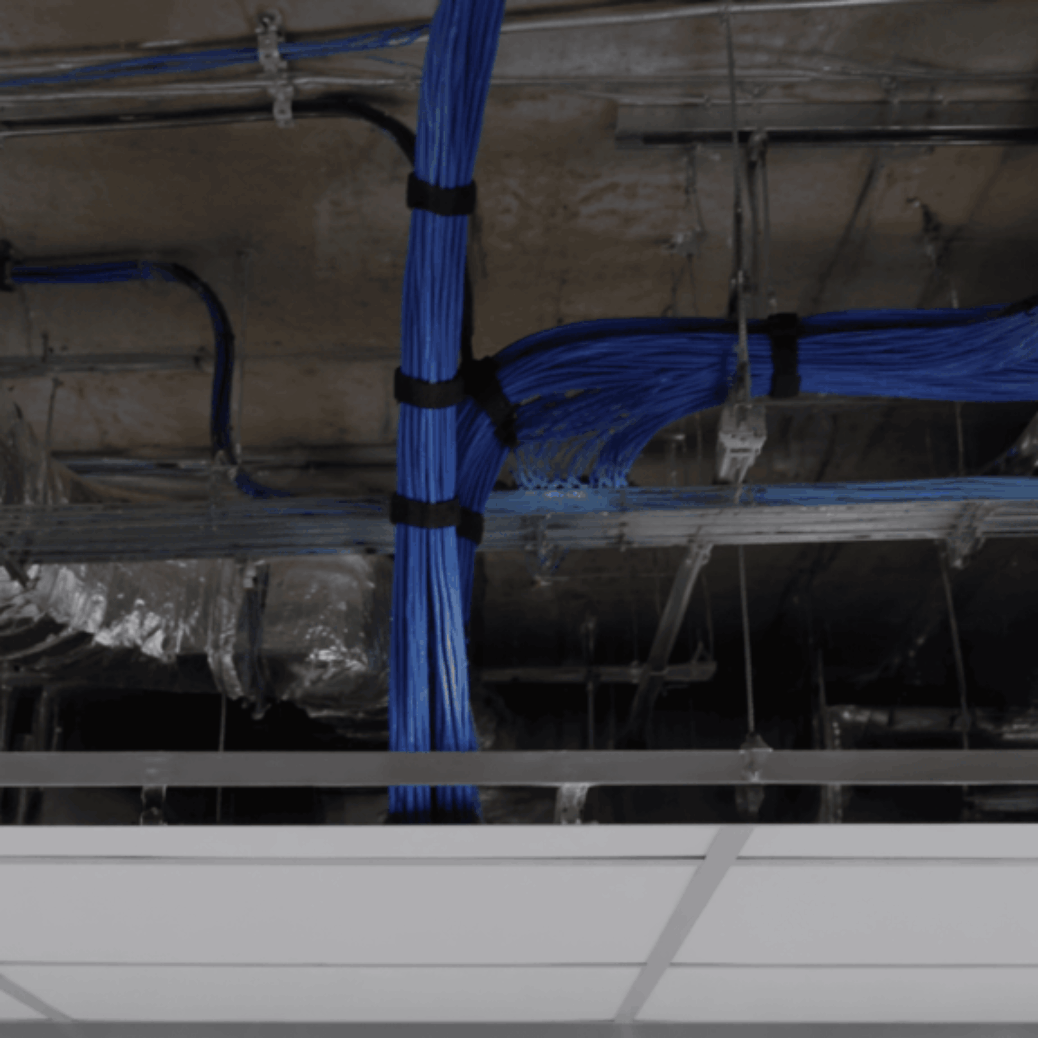
Running fiber inside a building usually means working through ceilings, cable trays, wall chases, network rooms, and conduit stubs that already exist. The pathway is often already there. The crew works in a climate-controlled environment. The fiber does not need to be armored or rated for outdoor burial.
Underground fiber is field work.
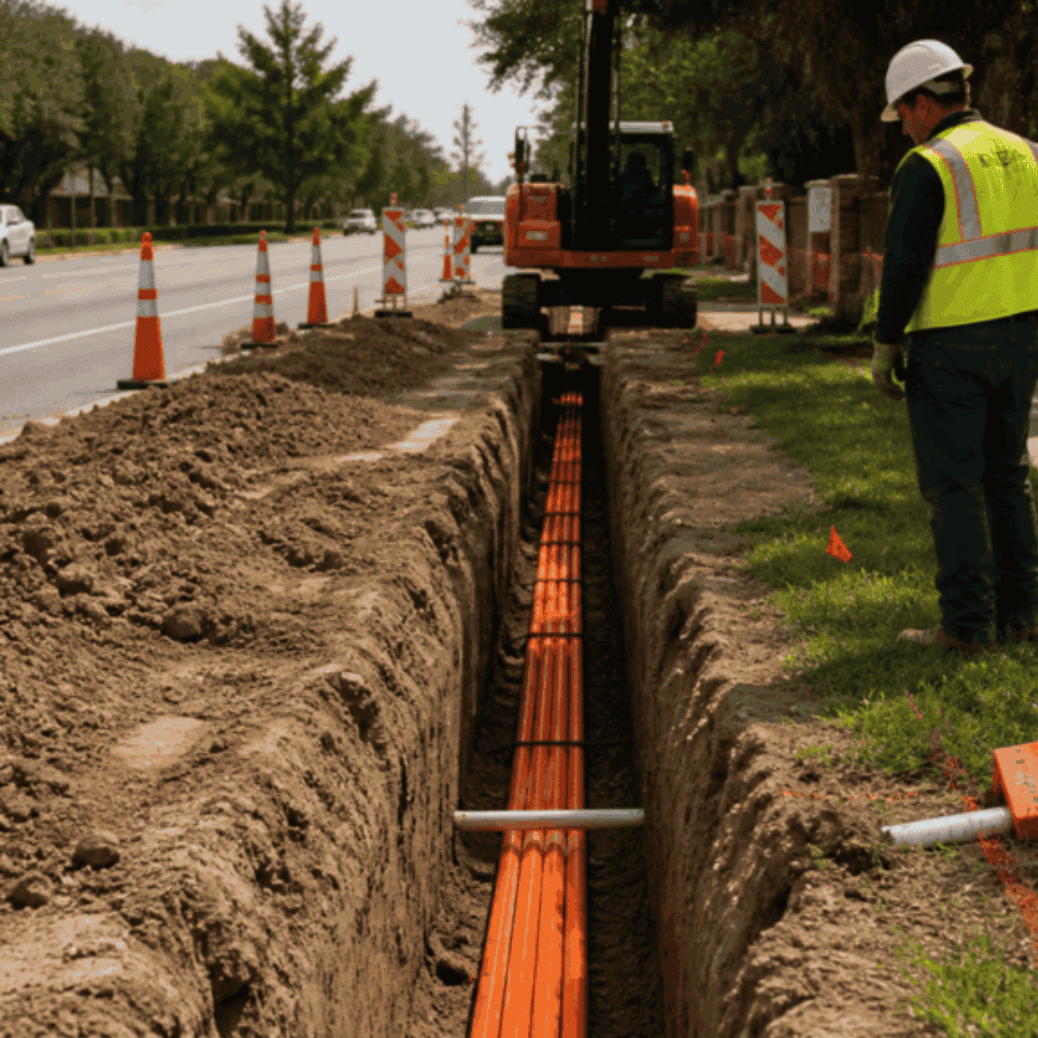
Before a single foot of cable goes in the ground, the site needs to be assessed, utilities need to be located, the route needs to be planned, and the method of installation needs to be decided. Then comes the actual excavation or boring. Then conduit placement. Then pulling the fiber. Then termination inside the building. Then testing. Then restoration.
The cable itself is a relatively small part of the total cost. Here is what actually drives underground fiber pricing higher than an equivalent indoor run:
- Excavation or directional boring, including equipment, labor, and time on-site
- Utility locating before any digging begins
- Outdoor-rated fiber, including armored or direct-burial rated cable
- Conduit placement, including material, labor, and pulling equipment
- Soil and surface conditions such as rocky soil, clay, asphalt, or concrete
- Pull boxes and handholes for longer runs, maintenance, and future pulling
- Building penetration, including core drilling through exterior walls and weather sealing
- Restoration work to return the surface to proper condition
Straight talk: Nobody ever looks at an underground fiber quote and thinks the conduit was the expensive part. But they usually should.
Trenching vs Directional Boring: Which Costs More?
This is the question most Dallas business owners do not think to ask until a contractor brings it up on-site. It matters.
The installation method affects not just the upfront cost, but also the restoration cost, timeline, and how much disruption your business or tenants experience during the job.
What Is Trenching?
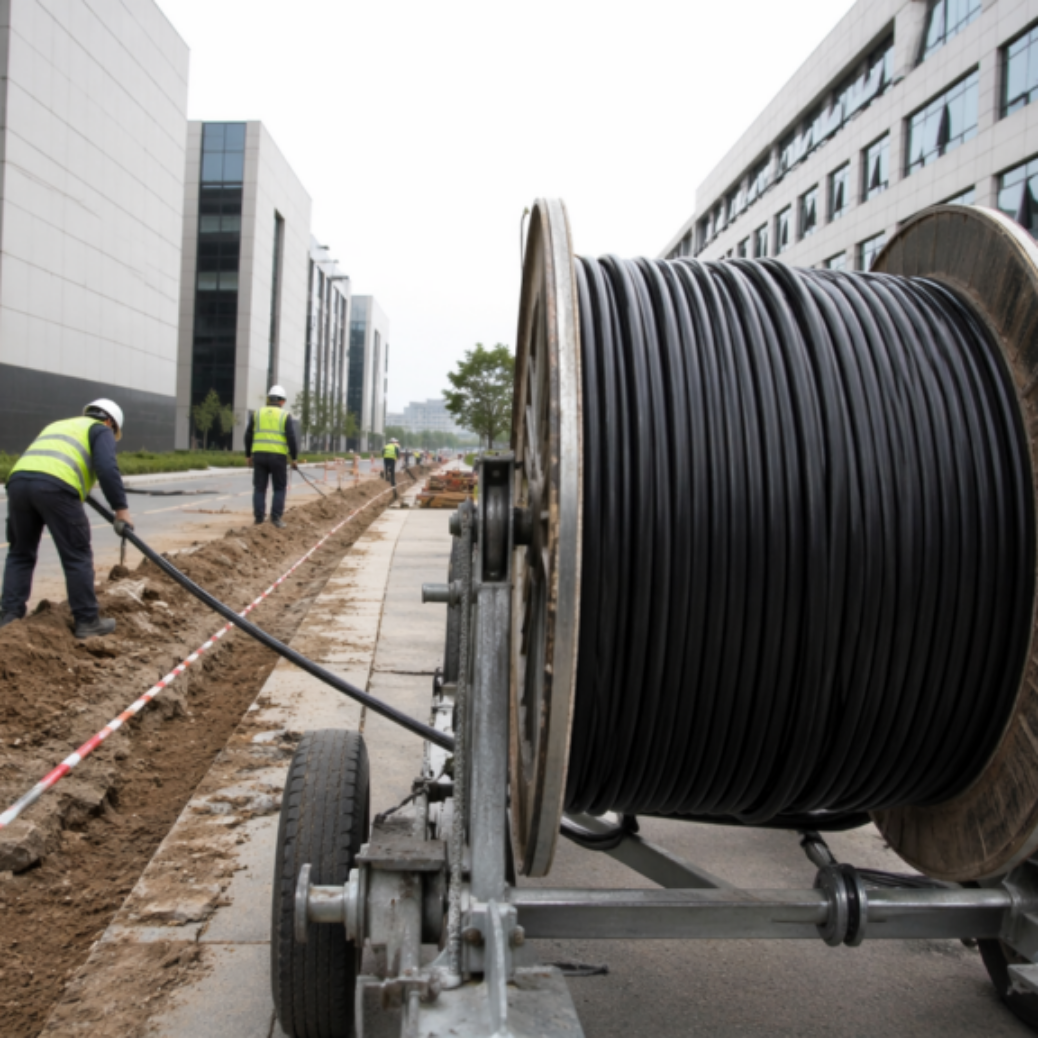
Trenching means opening the ground along the full cable path, placing conduit or cable in the trench, then backfilling and restoring the surface. It is the more traditional approach, and in the right conditions it is usually the faster and more affordable option.
Trenching works best when:
- The route runs through open soil or landscaped areas
- The site is new construction where the ground is already being disturbed
- There are no driveways, sidewalks, or parking lots in the path
- Surface restoration is straightforward, such as grass, gravel, or bare soil
What affects trenching cost:
- Soil type, because rocky or clay-heavy soil takes longer to dig and compact
- Trench depth, because deeper trenches in high-traffic areas add time
- Distance, because longer routes mean more crew hours, conduit, and restoration
- Utilities in the path, because crews may need to hand-dig around marked lines
- Surface restoration, because sod and gravel are cheaper than asphalt or concrete repair
What Is Directional Boring?
Directional boring, sometimes called horizontal directional drilling, is a trenchless method. Instead of opening the surface along the full route, a boring machine drills horizontally underground and pulls conduit through without disturbing the ground above.
Directional boring for underground fiber optic cable can bypass obstacles like sidewalks, driveways, parking lots, roads, and landscaping without requiring open-cut excavation.
Directional boring is typically the right call when:
- The route crosses a parking lot, sidewalk, road, or driveway
- The landscaping is finished and the property owner does not want it torn up
- The site is occupied, such as a retail center, medical building, or office park
- The route needs to pass under a fence line or concrete apron
- Restoration costs for trenching would make boring the more affordable total option
What affects boring cost:
- Soil type and depth, because harder soil or deeper bores require more time and larger equipment
- Distance, because boring machines work in sections and longer runs add setup and pull-back time
- Route complexity, because bends or changes in direction add complexity
- Bore size, because larger conduit requires a larger bore
- Entry and exit pit preparation, because both ends need access pits
Which One Should Dallas Businesses Choose?
It depends on the site. Trenching is generally more affordable when the route is clean, the ground is open, and restoration is simple. Directional boring usually costs more upfront because the equipment is more specialized and setup takes more time. But boring can save money overall when the alternative is cutting through a parking lot or tearing up finished landscaping.
A good contractor will look at your site, identify whether trenching or boring makes more sense for your specific route, and explain the tradeoff clearly. Be cautious of any contractor who commits to one method over the phone without seeing the property.
| Method | Best When | Watch Out For |
| Trenching | Open ground, new construction, and landscaping areas | High restoration cost if asphalt or concrete is in the path |
| Directional Boring | Parking lots, driveways, finished surfaces, and occupied sites | Higher equipment cost; soil type affects pricing |
Main Cost Factors for Underground Fiber Installation in Dallas
1. Distance Between Buildings or Network Rooms
The further the fiber needs to run, the more everything costs: cable, conduit, pull time, testing, and labor hours on-site.
Common examples in DFW commercial properties include:
- Main office building to a detached warehouse across a shared parking lot
- MDF room in one building to an IDF or server room in an adjacent building
- Security gate camera system to the main data room inside the office
- Corporate office to a detached training center or conference building
A short run through existing conduit between two close buildings is a very different project from a 500-foot run across a parking lot, under a driveway, and into a building that does not have an existing network room yet.
2. Route Complexity
A straight route over open ground is the easy version of this job. Real Dallas commercial properties often have parking lots, utility easements, concrete aprons, landscaping, fencing, roads, or existing underground infrastructure sitting exactly where the cleanest cable path would be.
Every obstacle adds cost. A route that has to jog around a gas line, pass under a driveway, and enter a building through an exterior wall that has not been cored before takes significantly more time than a clean straight pull through open soil. Route complexity is not something a contractor can see on a map.
3. Conduit Placement
Some customers ask whether conduit is really necessary. It is.
Conduit protects the fiber from physical damage, soil movement, moisture intrusion, and the slow deterioration that happens when cable is in direct contact with soil over years. More practically, conduit lets you pull a new cable through the same path in the future without digging again.
Our fiber optic installation services in Dallas-Fort Worth include conduit planning as part of every site assessment. The cost factors for conduit include the type, such as PVC, HDPE, or innerduct, the diameter, the distance, and whether it gets installed through open trenching or directional boring.
4. Fiber Type and Strand Count
Not all fiber cable is the same, and the type you choose affects both the upfront cost and long-term performance.
- Single-mode fiber uses a smaller core diameter and works best for longer distances and higher bandwidth. It is the standard for building-to-building runs and most commercial outdoor installations.
- Multimode fiber has a larger core and is often used for shorter indoor or campus connections where distance is limited. It usually costs less per foot but has a lower distance ceiling.
- Armored or outdoor-rated fiber is built for harsher conditions such as UV exposure, temperature swings, moisture, and mechanical force from soil pressure or rodents.
Corning outdoor fiber optic cable is engineered for demanding environmental conditions, including direct underground and conduit applications, making it a reliable choice for DFW commercial fiber projects.
Strand count also matters. A basic two-building connection might only need 6 or 12 strands. A multi-building campus with data center redundancy, security systems, access control, and IP cameras might need 24, 48, or more. Specifying the right count upfront, including spare capacity for future growth, is far cheaper than pulling new cable later.
5. Building Entry and Pathway
Getting fiber from outside the building to inside the network room is its own scope of work.
If the exterior wall does not have an existing conduit stub or sleeve, the crew needs to core drill through the wall, seal the penetration for weather and moisture, and route the fiber from the entry point to the rack or patch panel location.
Buildings with existing conduit entry points make this easier. Older commercial properties, repurposed warehouse spaces, and medical suites that have not been networked properly often require more work at the building entry than anywhere else on the route.
6. Termination, Splicing, and Patch Panels
Underground fiber that reaches the building still needs to be terminated properly before it is usable.
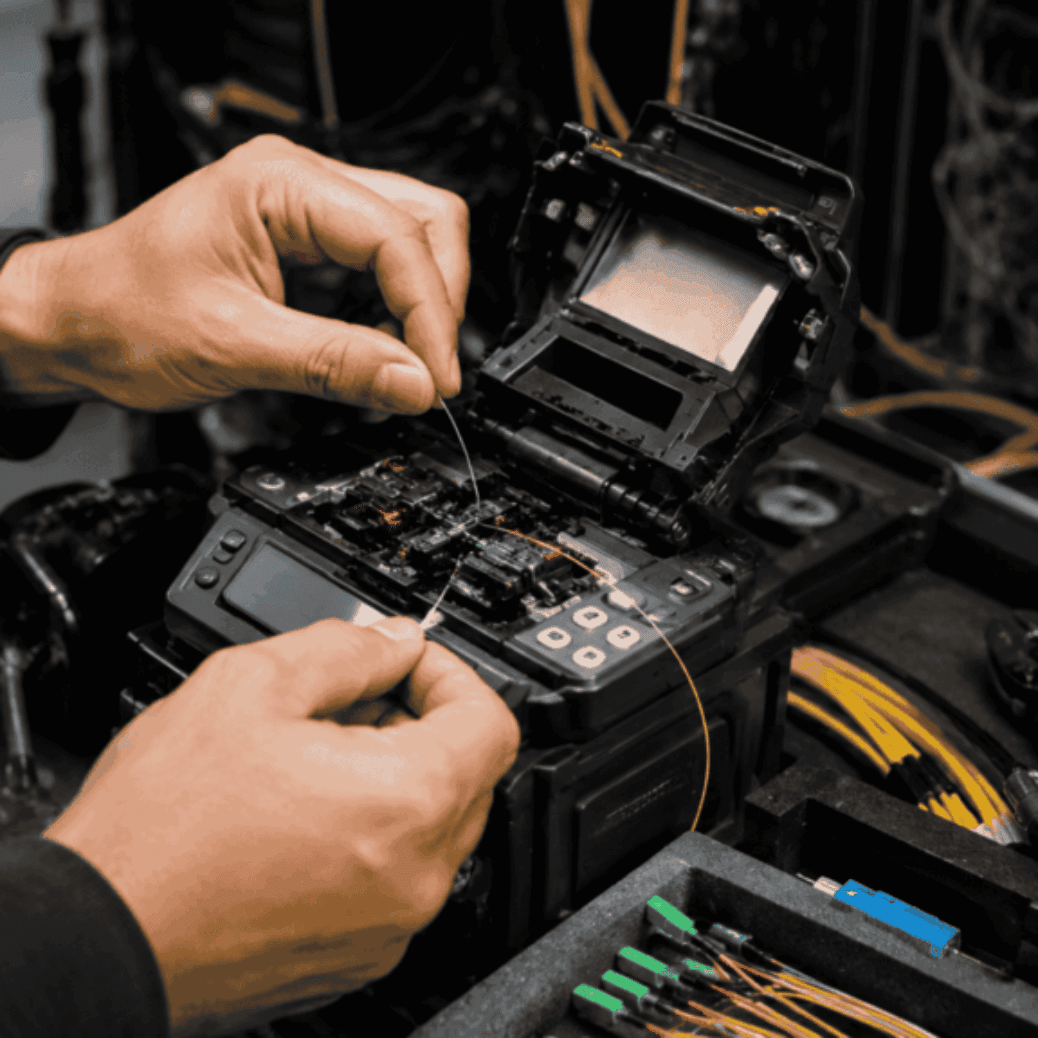
- Fusion splicing connects fiber segments with low signal loss and is common on longer runs where cable reels need to be joined.
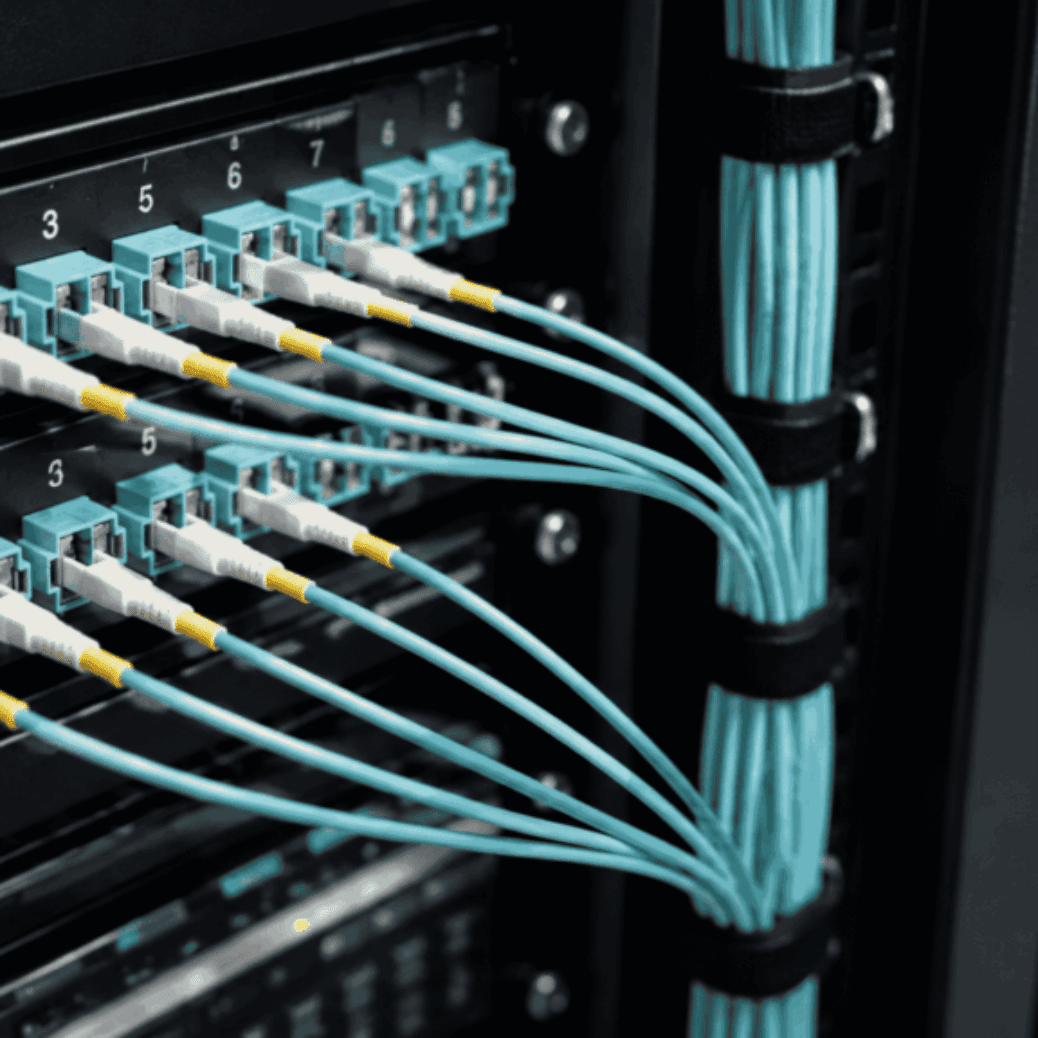
- Fiber termination at patch panels using LC or SC connectors is required at both ends of the link.
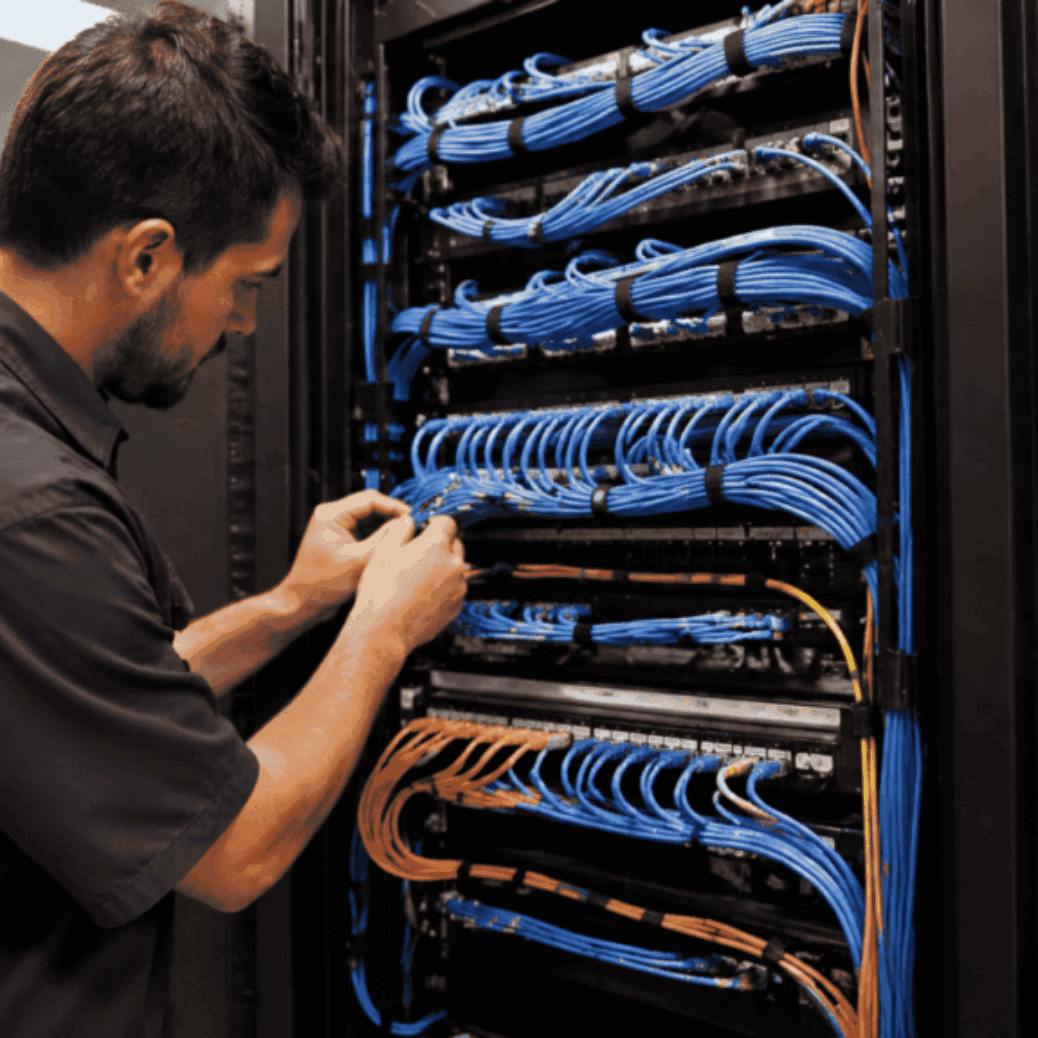
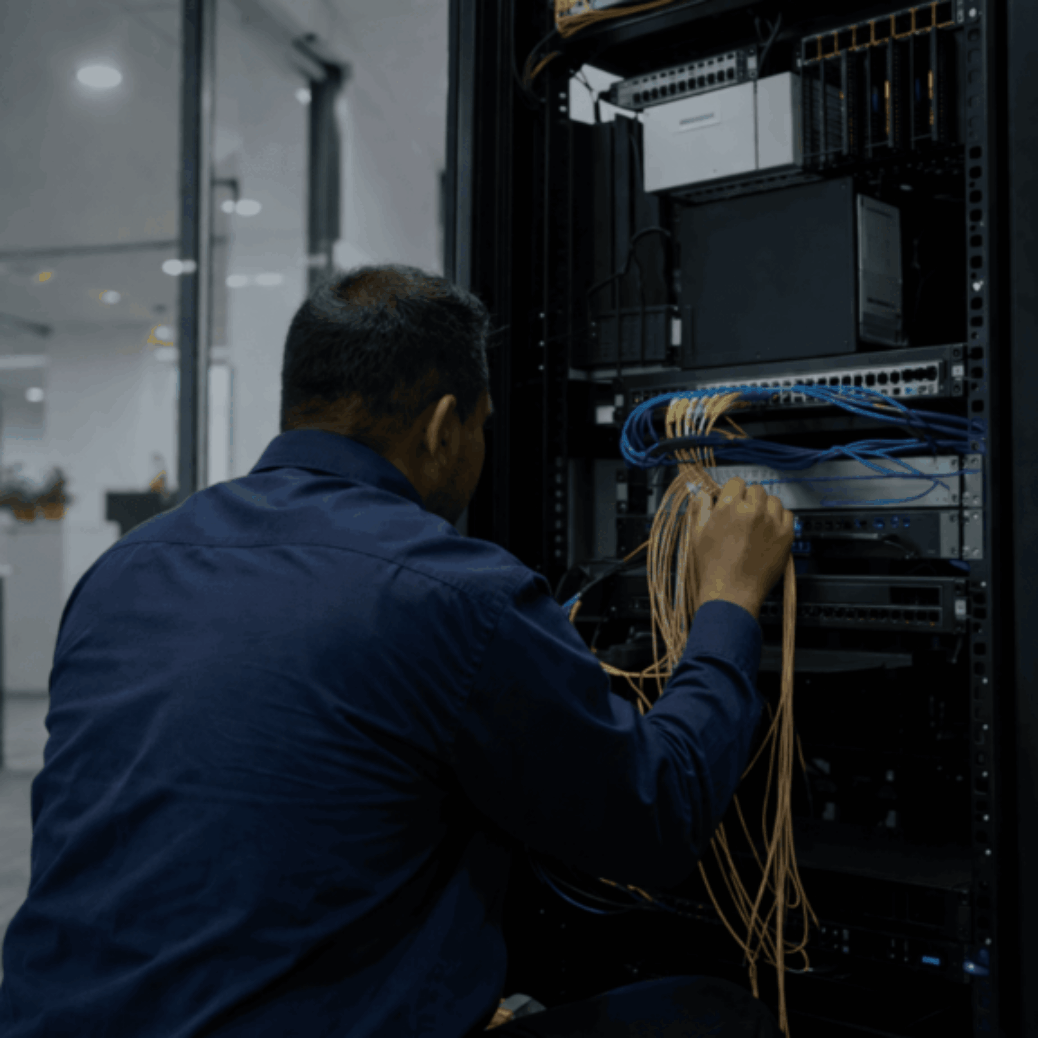
- Rack-mounted fiber enclosures organize and protect the termination points in the network room.
- Labeling and documentation make the installation maintainable long after the crew leaves.
For the network room side of the job, CommScope outside plant fiber optic cables are designed for reliability and durability in demanding network infrastructure environments, and they terminate cleanly into standard rack equipment.
7. Testing and Certification
Testing is not optional. A fiber installation that has not been tested is a fiber installation that is guessing.
Professional testing confirms signal quality, loss levels, and whether the link is ready for business use before the crew leaves the site.
- Light loss testing confirms attenuation across each fiber strand.
- OTDR testing identifies splice points, faults, or reflections along the run.
- End-to-end validation confirms the link works under real network conditions.
- Documentation is handed off with the project, including test results, cable routes, and connector labels.
Skipping testing does not save money. It only delays finding problems until after the contractor is gone.
8. Permits, Utility Locates, and Safety Requirements
Before any digging starts in Dallas, utilities need to be located. This is not optional and it is not a formality.
Texas 811 utility locate requests help contractors and businesses request that underground utilities such as gas, electric, water, telecom, and fiber be marked before excavation or boring begins. Hitting an unmarked utility line during a fiber installation is dangerous and expensive. It also delays the project significantly.
Some projects may require permits depending on the property, right-of-way, and local Dallas requirements. A contractor experienced in DFW commercial fiber work will know what is needed for your specific site and location.
9. Surface Restoration
Whatever the fiber route crosses, it needs to be restored after the job is done.
- Asphalt cutting and patching, common in parking lots and driveways
- Concrete cutting and repair for sidewalks, aprons, and building entries
- Landscaping repair, including sod replacement, topsoil, and irrigation if disturbed
- Parking lot restoration, including marking, sealing, and grading in commercial lots
- Cleanup and debris removal after excavation work
Restoration is often underestimated in initial budgeting. A route that crosses 200 feet of parking lot requires real asphalt repair work, not just backfill. Factor this in early.
10. Project Timing and Business Disruption
When you need the work done and how the site is being used during installation both affect the price.
After-hours or weekend work costs more than a standard daytime job. Phased installations, where the crew has to work around business operations, tenant schedules, or active areas, take longer than unobstructed access. If your project has a hard deadline or requires nighttime work to avoid disrupting tenants, plan for that cost from the beginning.
Underground Fiber Installation Cost by Project Type
Office Building to Office Building
This is one of the most common underground fiber requests in DFW: two buildings on the same property that need to share a network backbone. The cost depends on how far apart the buildings are, whether a parking lot sits between them, and how easy it is to enter each building’s network room.
Key factors include route distance, parking lot crossing, conduit pathway, rack or panel locations, and testing scope. Most of these projects also benefit from conduit installation so future cable pulls do not require redigging.
Warehouse or Distribution Center
Warehouses have large footprints and demanding environments. A fiber backbone that connects the main office to shipping docks, security gate cameras, Wi-Fi access points across the floor, and an IP phone system can easily involve runs of 300 to 600+ feet.
The access point density and security camera count both affect strand requirements. Harsh environments such as temperature swings, concrete floors, and forklift traffic make armored fiber and conduit more important, not less.
Medical or Dental Office
Medical offices cannot afford downtime. Imaging systems, patient records, VoIP phones, and networked devices all depend on a stable, high-bandwidth connection. When a medical practice expands into a second suite or building, underground fiber is often the cleanest way to connect both locations reliably.
The priority here is reliability and proper documentation. Every connection needs to be tested and labeled so future IT work does not become a guessing game.
Data Center or Server Room Connection
Fiber connections to data rooms and server rooms have higher performance requirements than standard office runs. More fiber strands, cleaner terminations, proper patch panels, cable management, and documentation are not optional. They are the baseline.
These projects also tend to plan for redundancy. Running a single fiber link to a data room is fine until that link fails. Running two separate paths from two separate entry points costs more upfront and matters a lot when something goes down.
Multi-Tenant Commercial Property
Connecting network infrastructure across a multi-tenant building or shopping center involves landlord coordination, shared pathway planning, existing conduit that may or may not be reusable, and individual tenant spaces that have different needs.
These projects usually require a site walk with the property manager before any scope can be confirmed. The existing infrastructure, including telecom rooms, conduit, and pull boxes, determines how much new work is actually required.
| Project Type | Key Cost Drivers | Watch Out For |
| Office to Office | Distance, parking lot crossing, and conduit | Building entry complexity on older properties |
| Warehouse / Distribution | Large footprint, strand count, and armored cable | Temperature and environment require the right cable spec |
| Medical Office | Reliability, documentation, VoIP, and imaging | Downtime is not acceptable, so scheduling must be careful |
| Data Center / Server Room | Panel quality, strand count, and redundancy | Budget for two fiber paths if uptime matters |
| Multi-Tenant Property | Landlord coordination and existing conduit reuse | Shared pathways may need separate planning sessions |
Is Underground Fiber Better Than Copper Cabling?
For outdoor building-to-building connections, yes. Fiber is the right call in almost every case.
Fiber does not have the 100-meter distance limit that copper does. It handles higher bandwidth. It does not pick up electrical interference from nearby equipment. It is more scalable. And when you are running cable through conduit underground, fiber is lighter and easier to pull over longer distances.
Copper still has a role. Workstation drops, phones, printers, Wi-Fi access points, and shorter Ethernet runs inside the building are all reasonable copper applications. Cat6 and Cat6A are cost-effective for those use cases.
For offices that also need workstation drops, phones, Wi-Fi access points, and network room cleanup alongside their underground fiber project, our office cabling Dallas services can handle the full buildout, from the underground backbone to every drop inside the building.
When Does a Dallas Business Actually Need Underground Fiber?
If any of these apply to your property, underground fiber is worth a conversation:
- Multiple buildings on the same property need to share a reliable network connection
- Your existing copper runs are too long for consistent gigabit performance
- Internet or internal network speed is not meeting business needs across locations
- Security cameras are far from the main recording or monitoring system
- A warehouse, parking structure, or detached facility needs to connect to the main office network
- The business is expanding into a second building or adjacent suite
- Existing underground conduit is damaged, full, or too old to use
- A data center or IT room needs a dedicated fiber backbone separate from shared network infrastructure
What Should Be Included in a Fiber Installation Quote?
Most fiber cost articles explain what affects pricing. Fewer explain how to read a quote when you get one. Here is what a complete underground fiber quote should include:
- Site survey confirmation and route documentation
- Installation method, such as trenching or directional boring, and why
- Conduit type, diameter, and total footage
- Fiber type, including single-mode or multimode, and strand count
- Termination scope, including patch panels, enclosures, and connectors at both ends
- Splicing details if applicable
- Testing and certification, including what gets tested and what documentation you receive
- Permit and 811 coordination, including who handles it and what it covers
- Surface restoration, including exactly what gets repaired and to what standard
- Timeline, including start date, completion estimate, and any phasing
- Exclusions, or what the quote does not cover
- Warranty on labor, materials, and test results
If a quote is missing most of these items, you are not comparing apples to apples when you get a second opinion. A detailed quote protects you as much as it protects the contractor.
Why a Site Visit Is Needed Before Final Pricing
A contractor cannot give an accurate underground fiber quote from a phone call. Every commercial property in Dallas is different: different soil, different surface conditions, different underground utilities, different building entry points, and different network room locations.
A site walk-through lets the contractor confirm:
- The actual route distance, not just what Google Maps shows
- Whether existing conduit is present, usable, and correctly sized
- Soil conditions and surface type along the route
- Utility risks and required 811 coordination
- Building entry requirements, such as existing sleeves, core drilling needs, and sealing
- Network room location and rack space availability
- Restoration scope, including what surfaces the route crosses and what repair looks like
- Equipment access, including whether a boring rig can get where it needs to go
- Business schedule and whether there is a window for work that does not disrupt operations
Bottom line: A quote without a site visit is an educated guess. A quote after a site visit is a real number. Always insist on one before signing anything.
How to Reduce Underground Fiber Installation Cost Without Cutting Corners
There are legitimate ways to manage cost on a fiber project without compromising the installation.
- Use existing conduit if it is in good condition and correctly routed. This eliminates the biggest cost on many projects.
- Plan the project during construction or remodel when the ground is already disturbed.
- Specify the right strand count for today’s needs plus realistic growth. Pulling new cable is expensive.
- Avoid mid-project route changes because every change adds labor and material cost.
- Confirm utility locates early so there are no delays waiting on 811 markings.
- Coordinate with the property manager before the project starts. Surprises slow everything down.
- Plan MDF and IDF locations before installation begins. Moving rack locations after conduit is in place costs money.
- Use proper documentation from day one. Labeled cables and test records save hours on future troubleshooting.
One thing that does not reduce cost in the long run: hiring the cheapest contractor. Poor underground fiber work means callbacks, downtime, untraceable faults, and re-pulling cable that was not installed correctly the first time. That costs more than doing it right.
If your project also involves running conduit for future expansion or multi-pathway planning, our conduit installation services are built around protecting your long-term infrastructure investment.
Recommended Fiber Products and Brands
For commercial underground fiber projects in Dallas-Fort Worth, contractors typically work with brands that are well-established in the outside plant and structured cabling space. The brand matters less than using the right product for the right application, but starting with quality materials reduces failure risk significantly.
Brands commonly used on DFW commercial fiber projects include:
- Corning for outdoor and underground fiber cable, including armored and direct-burial options
- CommScope for outside plant fiber cables built for demanding infrastructure environments
- Panduit for fiber enclosures, patch panels, and cable management
- Belden for structured cabling and fiber products for commercial installations
- Hubbell for connectivity products and network infrastructure components
For outside plant applications, CommScope outside plant fiber optic cables are a common choice on DFW commercial projects where durability and long-term performance are the priority.
The right product depends on the run distance, conduit type, burial depth, and what equipment is on both ends. A contractor should be recommending cable specs based on your project, not just what is on the truck.
Underground Fiber Installation Mistakes to Avoid
- Not calling 811 before digging. This is a safety issue, not just a procedural one.
- Choosing cable type before confirming distance, depth, and burial conditions.
- Ignoring conduit. Direct burial without conduit saves money upfront and costs more later.
- Not planning spare strands. Pulling new cable is expensive; specifying extra strands costs very little more.
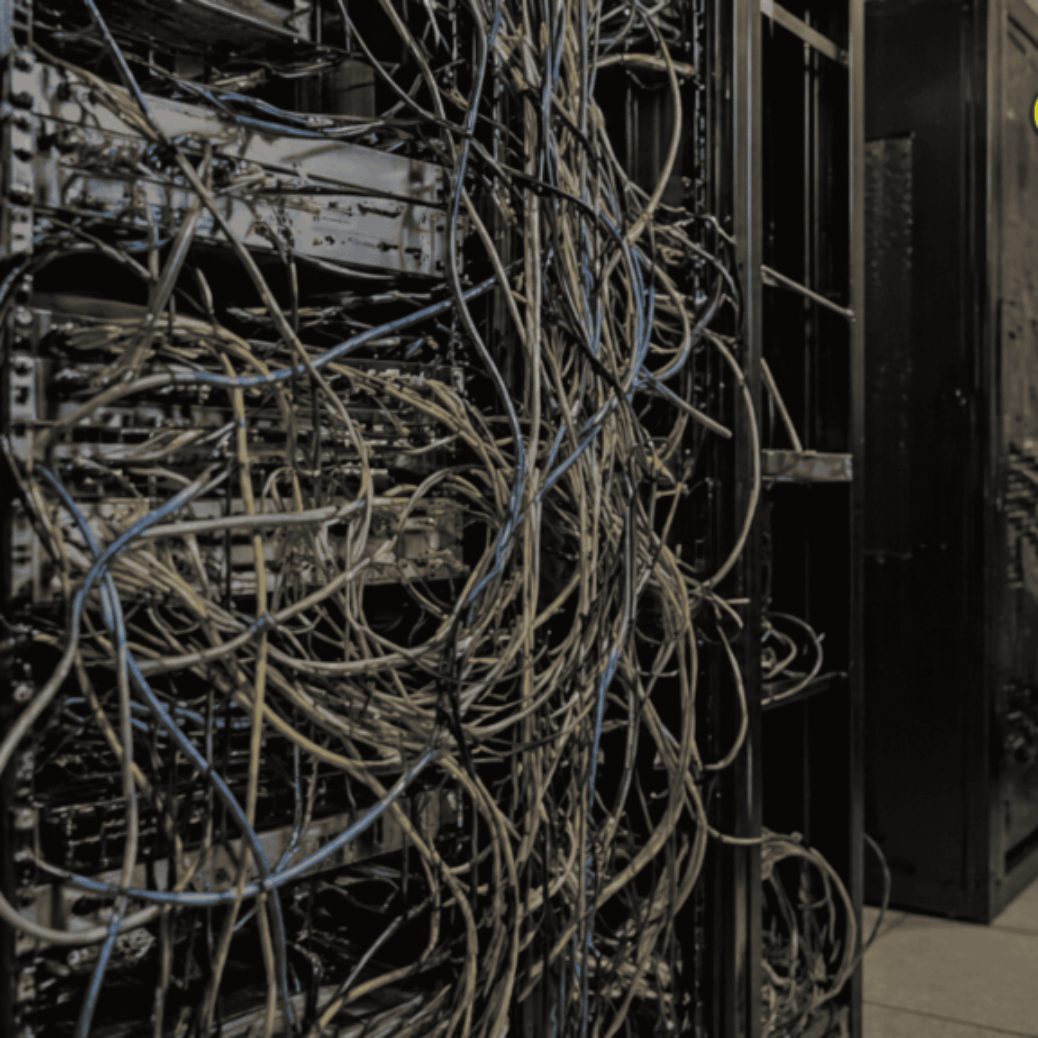
- Poor or no labeling. This makes future troubleshooting or expansion significantly harder.
- Skipping testing. Accepting a fiber link without test results means trusting that everything went right.
- Forgetting restoration cost. Surface repair is real money and should not be a surprise.
- Not documenting the route. When something needs to be repaired years later, nobody remembers where the fiber runs.
- Running fiber without future expansion planning. A 12-strand install that maxes out in two years may require another dig.
- Accepting vague quotes. If a contractor cannot itemize the scope, you cannot compare bids accurately.
Dallas Underground Fiber Installation Checklist
Before the project starts, work through this list:
- Confirm the business need: what buildings or rooms need to connect and why.
- Walk the route and physically trace the path from building to building.
- Check for existing conduit and confirm whether it is present, usable, and correctly sized.
- Identify surface types along the route, such as open soil, asphalt, concrete, or landscaping.
- Decide trenching vs boring with contractor input after the site walk.
- Confirm utility locate requirements through 811 before any digging begins.
- Choose fiber type and strand count, including single-mode, multimode, armored, and spare strands.
- Plan termination points, including patch panels, enclosures, and rack space at both ends.
- Schedule work around business operations to minimize disruption to tenants and staff.
- Test and certify the fiber with light loss testing, OTDR if needed, and documented results.
- Save documentation, including cable routes, test results, and panel labels for future reference.
Useful Resources for Your Fiber Project
If you are planning a larger fiber project or want to understand how fiber fits into a broader office or campus buildout, these related guides cover the details:
The Ground Truth: What Should Dallas Businesses Expect to Pay?
Underground fiber optic cable installation in Dallas does not have a fixed price. It never will.
The route, the distance, the installation method, the conduit, the fiber type, the termination scope, the testing requirements, and the restoration work after the job is done all affect the number on the quote.
What you can expect: a contractor who does this work properly will walk your site before putting a number together. They will tell you what method makes sense for your route, what fiber spec fits your distance and bandwidth needs, and what the restoration will look like when the crew leaves.
What you should avoid: contractors who quote over the phone without seeing the property, bids that do not itemize the scope, and anyone who says restoration is included without specifying what that means.
The best fiber installation is the one that works reliably for the next 10 to 15 years without requiring a callback. That is what a proper site visit, the right materials, certified testing, and accurate documentation actually buy you.
Need underground fiber for a Dallas office, warehouse, campus, or multi-building property? The first step is a site walk-through, not a ballpark number from a search result.
Contact Cabling in DFW for fiber optic installation services in Dallas-Fort Worth. We will walk the site, map the route, and give you a quote built for your actual project.
Frequently Asked Questions
How much does underground fiber optic cable installation cost in Dallas?
The cost depends on distance, trenching or directional boring, conduit, cable type, termination, testing, permits, and surface restoration. A short run through existing conduit between two close buildings may cost far less than a new underground route crossing a parking lot or connecting multiple buildings. A site visit is needed before any accurate number can be given.
Is directional boring better than trenching for fiber optic cable?
Directional boring is often the better choice when the fiber route crosses parking lots, sidewalks, roads, driveways, or finished landscaping. It avoids the surface disruption and restoration cost that open trenching creates in those areas. Trenching may be more affordable in open soil or new construction sites. The right method depends on your specific route and site conditions.
Do Dallas businesses need permits for underground fiber installation?
Some projects require permits or utility coordination depending on the property, right-of-way, and local Dallas requirements. Utility locating through Texas 811 should always happen before excavation or boring begins. It is required, not optional.
What type of fiber is best for underground installation?
Single-mode fiber is the standard choice for outdoor and building-to-building connections, especially over longer distances. Outdoor-rated, armored, or conduit-protected fiber is recommended depending on the burial depth, soil conditions, and protection needs. A contractor should spec the cable based on your actual route, not a generic recommendation.
Why is underground fiber more expensive than indoor fiber?
Underground fiber requires excavation or boring, utility locating, outdoor-rated cable, conduit, surface restoration, and significantly more field labor than running fiber through a building’s existing ceiling or cable tray infrastructure. The cable itself is rarely the biggest cost. The pathway and labor are.
Can underground fiber connect two buildings on the same property?
Yes, and this is one of the most common use cases for underground fiber in Dallas commercial properties. The project should include proper route planning, conduit, termination at both ends, fiber testing, and documentation of the full link.
Does fiber optic installation include testing?
A professional fiber installation should always include testing to confirm signal quality and performance across every strand. Testing typically includes light loss testing at minimum, OTDR testing when needed for longer or more complex runs, and documented test results for your records.
What is the difference between single-mode and multimode fiber for outdoor installations?
Single-mode fiber is designed for longer distances and higher bandwidth. It is the right choice for most outdoor commercial runs. Multimode fiber is typically used for shorter indoor campus runs where distance is limited. For underground building-to-building connections, single-mode is almost always the correct specification.
Ready to Get a Real Quote for Your Underground Fiber Project in Dallas?
Call Cabling in DFW or request a site walk-through today. We serve commercial
properties across Dallas-Fort Worth, including Plano, Frisco, Irving, Arlington,
and surrounding areas.
Request a Site Walk-Through